Alarm Systemlink
Last updated: October 20, 2023
Summarylink
The Model S is equipped with an alarm system which monitors for any unwanted entry into the vehicle and alerts the user if any such instance is detected. This system is activated 60 seconds after the vehicle is locked and checks the status of the door and front/rear trunk latches. If any intrusion is detected, the alarm system is activated, causing the horn to sound once every second and turn signals to flash.
For European vehicles and Model S vehicles with a retrofitted sensor, the alarm system is equipped with a Tilt/Intrusion sensor.
For EU vehicles only, a Battery Backup Siren (BBUS) is also installed to respect local regulations. For those vehicles, the siren will sound instead of the horn. If for any reason the BBUS fails, EU vehicles will default back to the horn until the siren is fixed. The turn signals will flash in any market.
How to Identify a Vehicle Alarm System Configurationlink
There are three different alarm system hardware configurations.
By default, all EU vehicles are equipped with a Tilt/Intrusion sensor and a BBUS.
Outside of the EU market and by default, all vehicles are built without this hardware, but it is possible to have the Tilt/Intrusion sensor retrofitted at Tesla Service Centers. The BBUS is not available for retrofit.
Specificationslink
All Marketslink
The alarm can be manually disabled or enabled by going to Controls > Safety & Security > Security Alarm.
The alarm is partially armed when the vehicle is parked and locked using the key fob, Tesla mobile app, or Walk Away Lock. The alarm will then transition to armed after 1 minute if no unlocking request is received.
If armed, the alarm is triggered when any door or trunk is opened.
Note
The alarm is not triggered if the front or rear trunk is opened by an authorized entry (e.g from Tesla mobile app). See Trunk Theory of Operation for more information.
The alarm automatically stops making a sound after 30 seconds, and will re-activate after 1 minute for a maximum of 10 total activations.
Note
The alarm is still active, even though the sound has stopped.
Once the alarm has been triggered, it is possible to disable the alarm by pressing a button on the key fob or unlocking the vehicle with the Tesla mobile app.
EU and sensor retrofitted vehicles onlylink
The Tilt/Intrusion detection system can be disabled by the user when the alarm is not armed, by going to Controls > Safety & Security > Tilt/Intrusion. Note the security alarm needs to be enabled for the Tilt/Intrusion detection to be ON. After each unlock event and if the vehicle drive rail is powered, the Tilt / Intrusion setting is reset by default to ON.
When the Tilt/Intrusion is set to ON, the alarm is triggered when motion is detected inside the cabin, when a window is broken, or when the vehicle is moved or tilted. A vehicle might be moved or tilted when the vehicle is on a tow truck or on a vehicle jack.
Note
Turn off the tilt/intrusion sensors whenever a moving object is inside the vehicle. Any type of motion detected inside the vehicle triggers the alarm.
EU vehicles onlylink
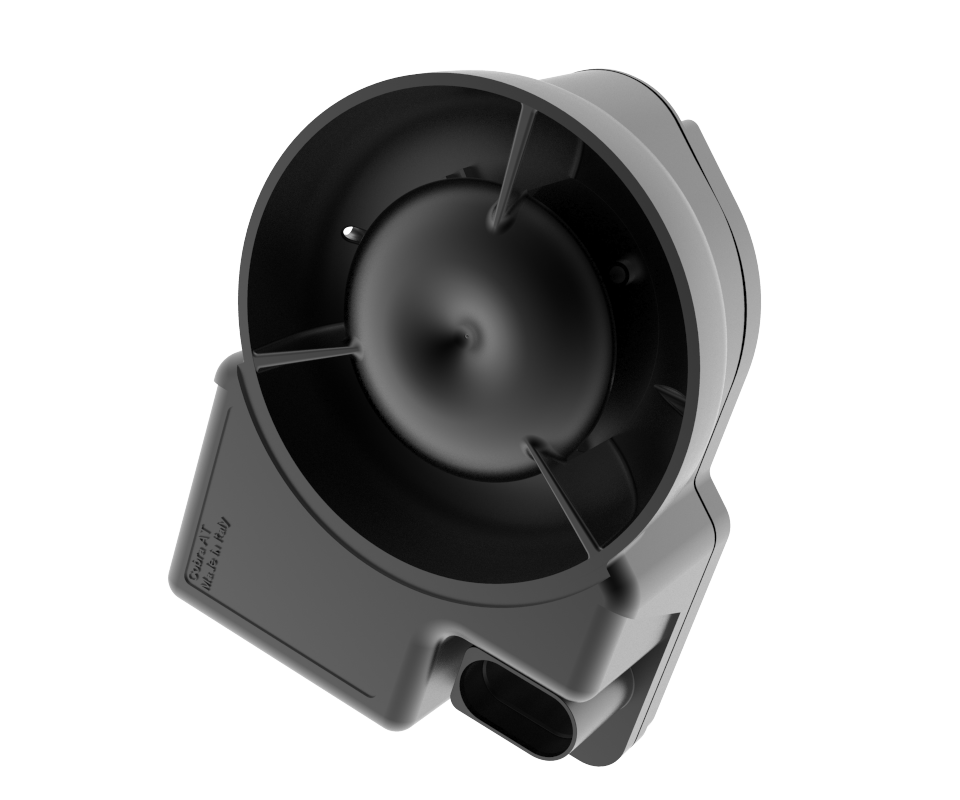
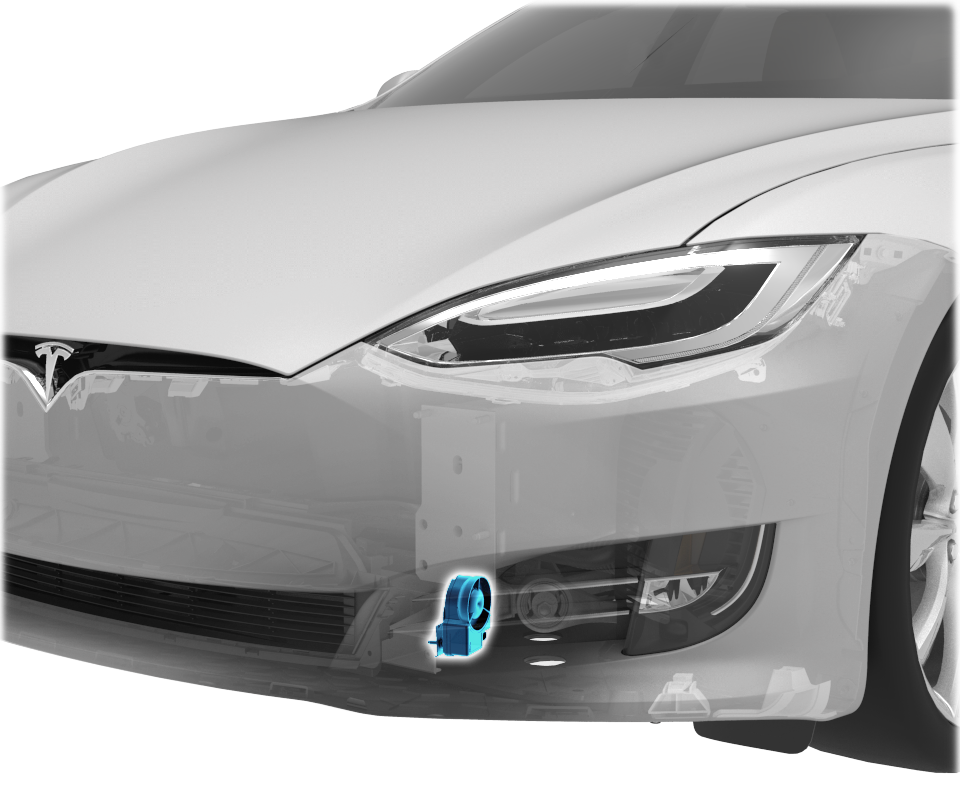
The EU vehicle has a Battery Back-Up Siren (BBUS) that will make a sound instead of using the horn.
Component Descriptionslink
Component Locationslink
 |
 |
|---|---|
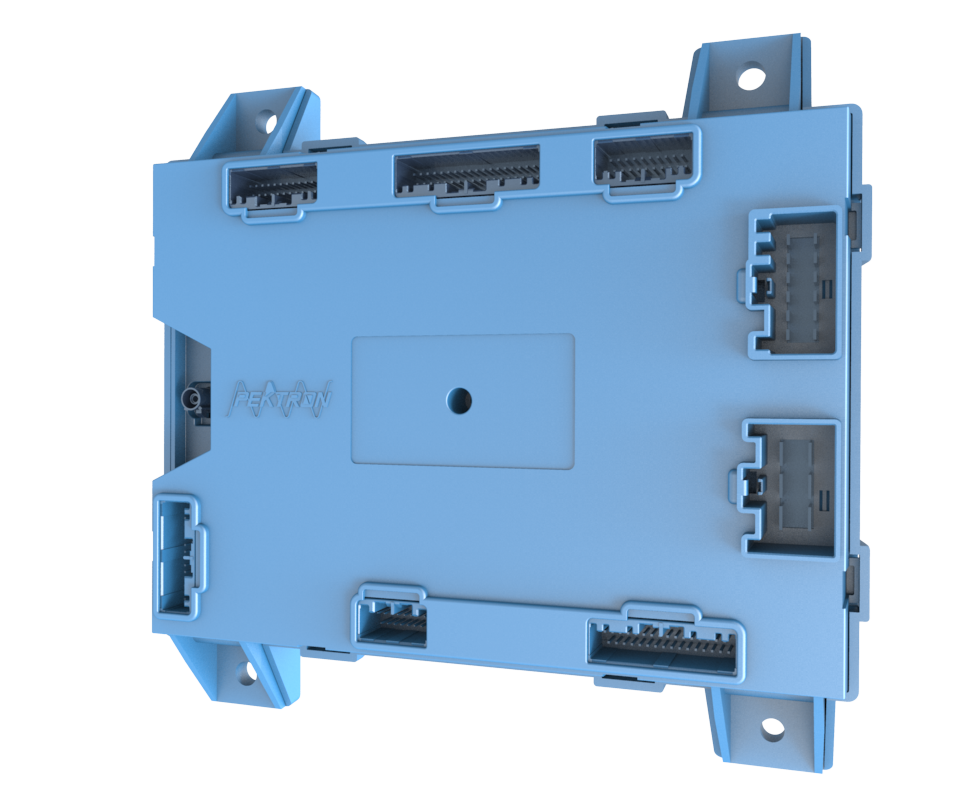
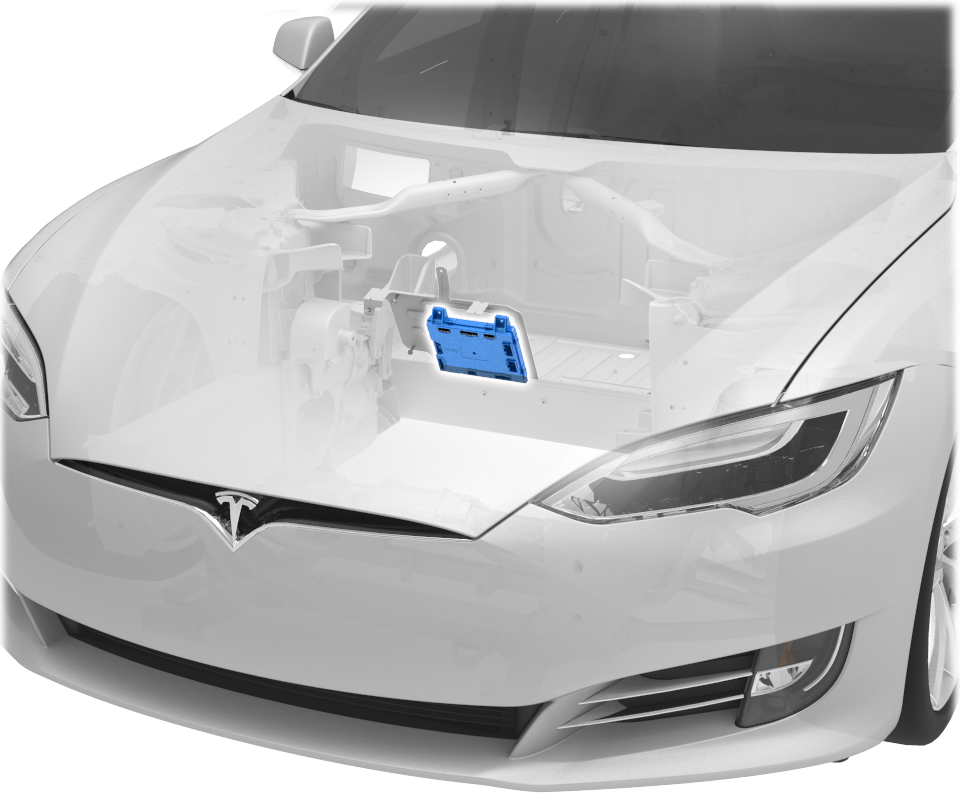
| Body Control Module (BCM) | Body Control Module (BCM) Location |
 |
 |
|---|---|
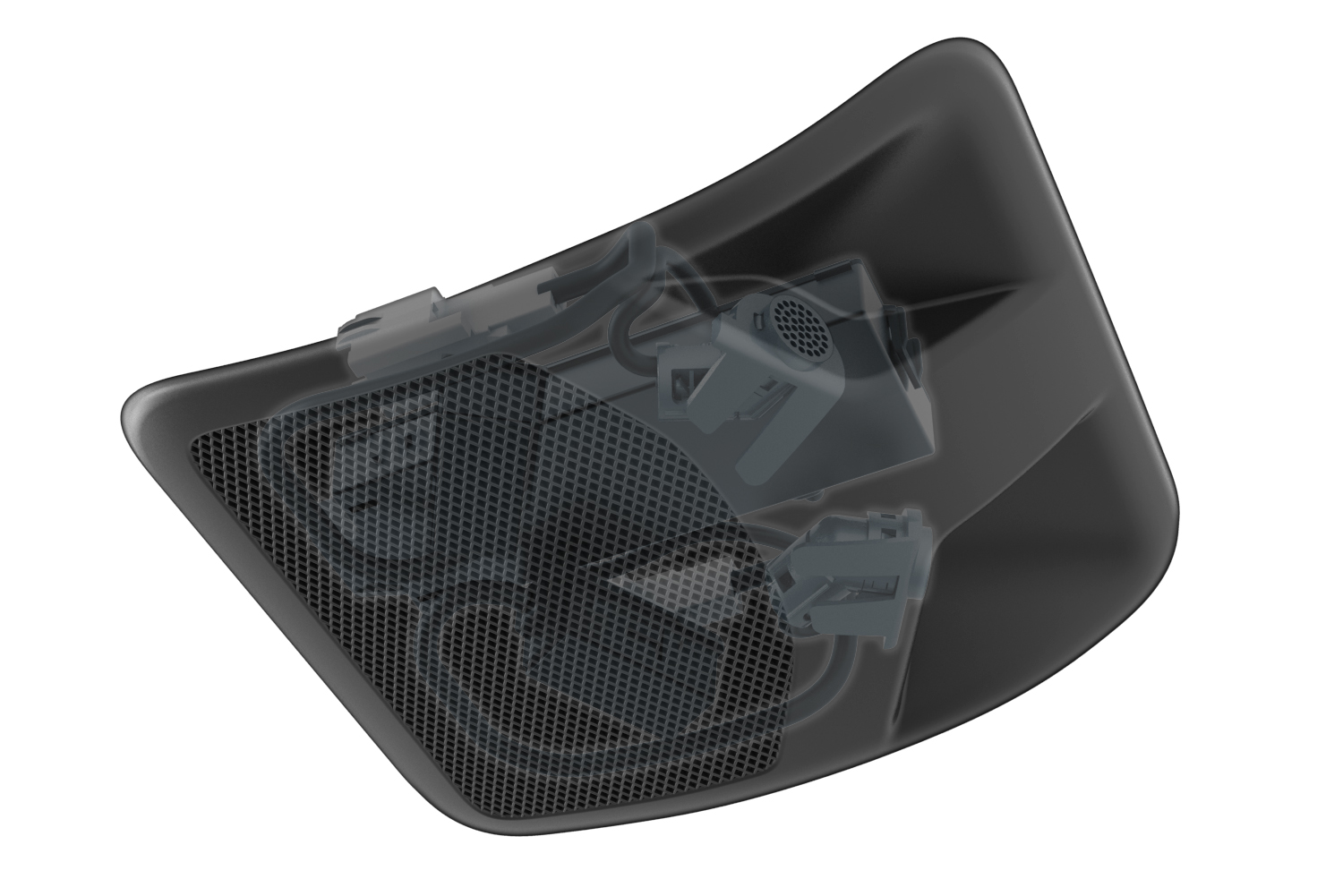
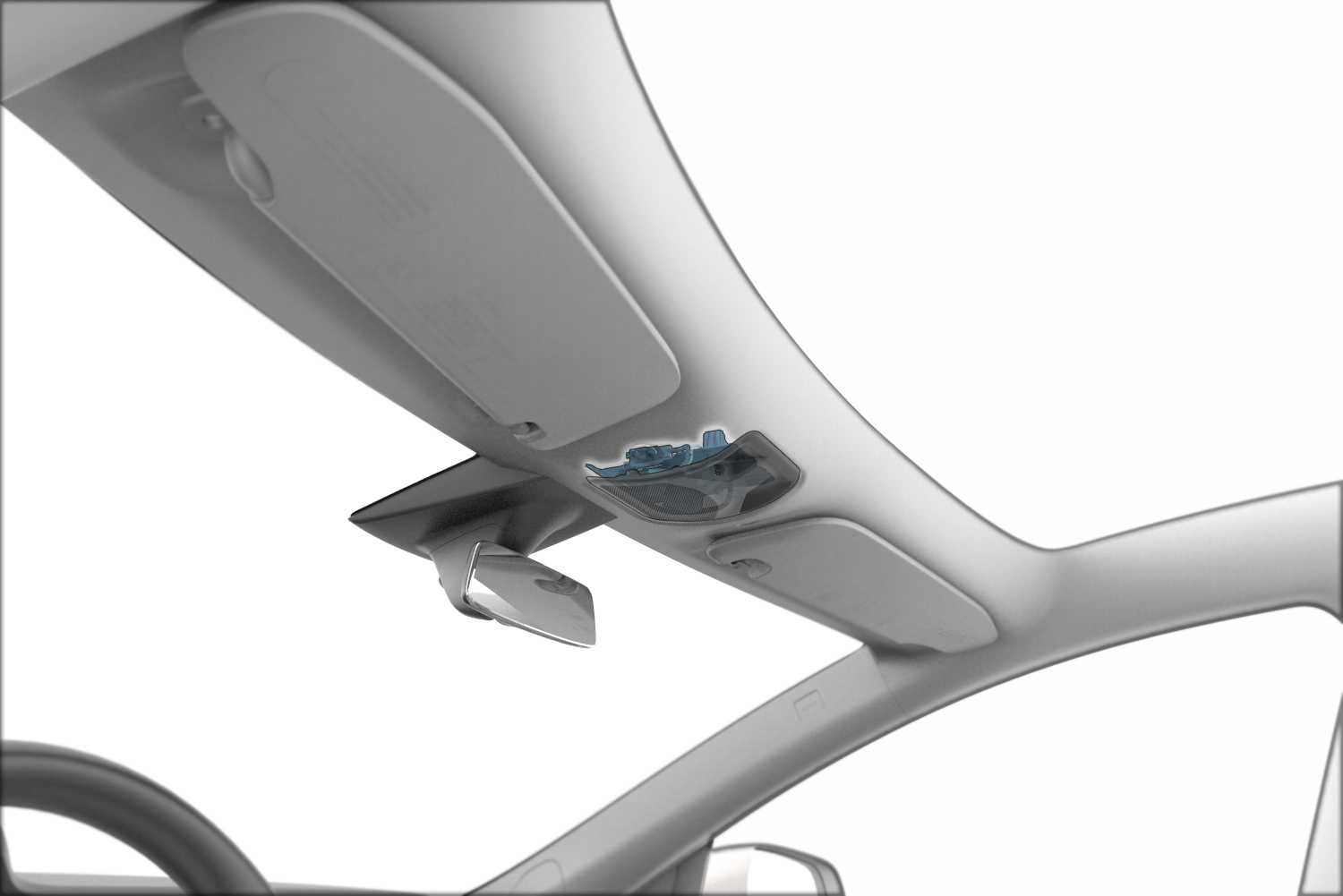
| Tilt/Intrusion Sensor and ECU | Tilt/Intrusion Sensor and ECU Location |
 |
 |
|---|---|
| Battery Back-Up Siren (BBUS) | Battery Back-Up Siren Location |
Alarm Operationlink
The Model S continuously monitors the status of all latches (front doors, rear doors, rear trunk and front trunk) and sends the data to the Body Control Module (BCM). When any of the latches are opened when the vehicle is supposed to be locked, the horn makes a sound and the headlamps and turn signals flash. Even though one of the closures may be physically opened, the vehicle status remains locked.
Intrusion Detection (EU and Retrofitted Vehicles Only)link
Model S vehicles sold in Europe or had the Tilt/Intrusion sensor retrofitted are equipped with 2 intrusion sensors located in the front overhead console. The BCM controls the intrusion sensors electronic control unit (ECU) over the Local Interconnect Network (LIN) and act as a master.
The intrusion detection is based on the Doppler effect. One sensor generates sound waves (emitter sensor) that are inaudible to the human ear (ultrasonic frequency). A second sensor monitors the sound in the vehicle (receiver sensor) and transmits the recorded sound waves to an ECU which compares the frequency of emitted and received sound waves to determine if there was any movement in the vehicle.
If there is no movement, the emitted and received signals have the same frequency. If there is movement inside the vehicle, the emitted and received frequencies will be different because of the Doppler effect. If the sound waves reflect on a moving object, its frequency will be modified, meaning any motion inside the vehicle will cause the ECU to detect a frequency shift.
If a frequency shift is detected, it causes the intrusion sensors ECU to send an alarm message to the BCM over the LIN bus, which causes the BCM to actuate the ring function of the BBUS.
Tilt Detection (EU and Retrofitted Vehicles Only)link
Model S vehicles sold in Europe or that had the Tilt/Intrusion sensor retrofitted are equipped with a tilt detection sensor located in the Tilt/Intrusion ECU inside the front overhead console.
The tilt sensor is an Inertial Measurement Unit (IMU) that monitors the vehicle movement and inclination. If the vehicle is tilted (e.g for steeling a wheel) or towed, the IMU will measure an acceleration and trigger the alarm. The behavior and triggering of the alarm are the same as for the intrusion detection.
Battery Back-Up Siren (BBUS) (EU Vehicles Only)link
Model S vehicles sold in Europe are equipped with a BBUS required by local regulation. The Central Body Controller (BCCEN) controls the BBUS over LIN and act as a master.
The BBUS is triggered by the BCM over LIN, and will sound until requested to stop. While the alarm is armed, if the communication between the BCM and the BBUS is cut or low voltage power is removed, the siren sounds. If this occurs, the headlamps and turn signals will not flash and the BCM will not report it as an alarm trigger.
Specific Behaviorlink
Sleeplink
The vehicle may go to sleep while the alarm is active, at which point the flashing and sounds will stop. When the vehicle wakes up, the alarm status will either be active or inactive , depending on how long the vehicle was asleep. The flashing and sounds will resume if the vehicle wakes into the active state.
If never disarmed, the alarm status will flip between active and inactive for 15 minutes, and then stays as inactive indefinitely.
Trunk Openinglink
If the trunk is opened while the vehicle is locked and the alarm is armed, there are two different behaviors, depending on the opening request source:
-
Opening the trunk from the exterior handle with the key nearby will disarm the alarm completely. This corresponds to a Passive Entry (PE) unlock.
-
Opening the trunk with the Tesla mobile app or double clicking the rear trunk button of the key fob will only disarm the intrusion and tilt sensors (for EU vehicles only) until the trunk is closed. After the trunk is closed, the alarm is partially armed, and then armed after 60 seconds.
Climate Controllink
The Tilt/Intrusion sensor automatically disables in situations where the climate control system might operate while the vehicle is locked, and the alarm is armed.
If Keep Climate On, Dog Mode, or Camp Mode is activated, the Tilt/Intrusion sensor will be disabled. This behavior can be overridden to keep the Tilt/Intrusion sensors ON by touching Controls > Safety & Security > Tilt/Intrusion after enabling Keep Climate On, Dog mode, or Camp mode.
Note
Keeping the Tilt/Intrusion sensor enabled while Keep Climate On, Dog Mode, and Camp Mode is active can trigger an alarm event as a result of air movement inside the cabin.
If Cabin Overheat Protection is activated, the Tilt/Intrusion sensor will also be disabled. This behavior cannot be overridden and activation of the Tilt/Intrusion sensor will disable the Cabin Overheat Protection.
Sentry Modelink
Sentry Mode can only be enabled if the security alarm and the Tilt/Intrusion sensor are disabled.