Front Doorslink
Last updated: September 18, 2024
Overviewlink
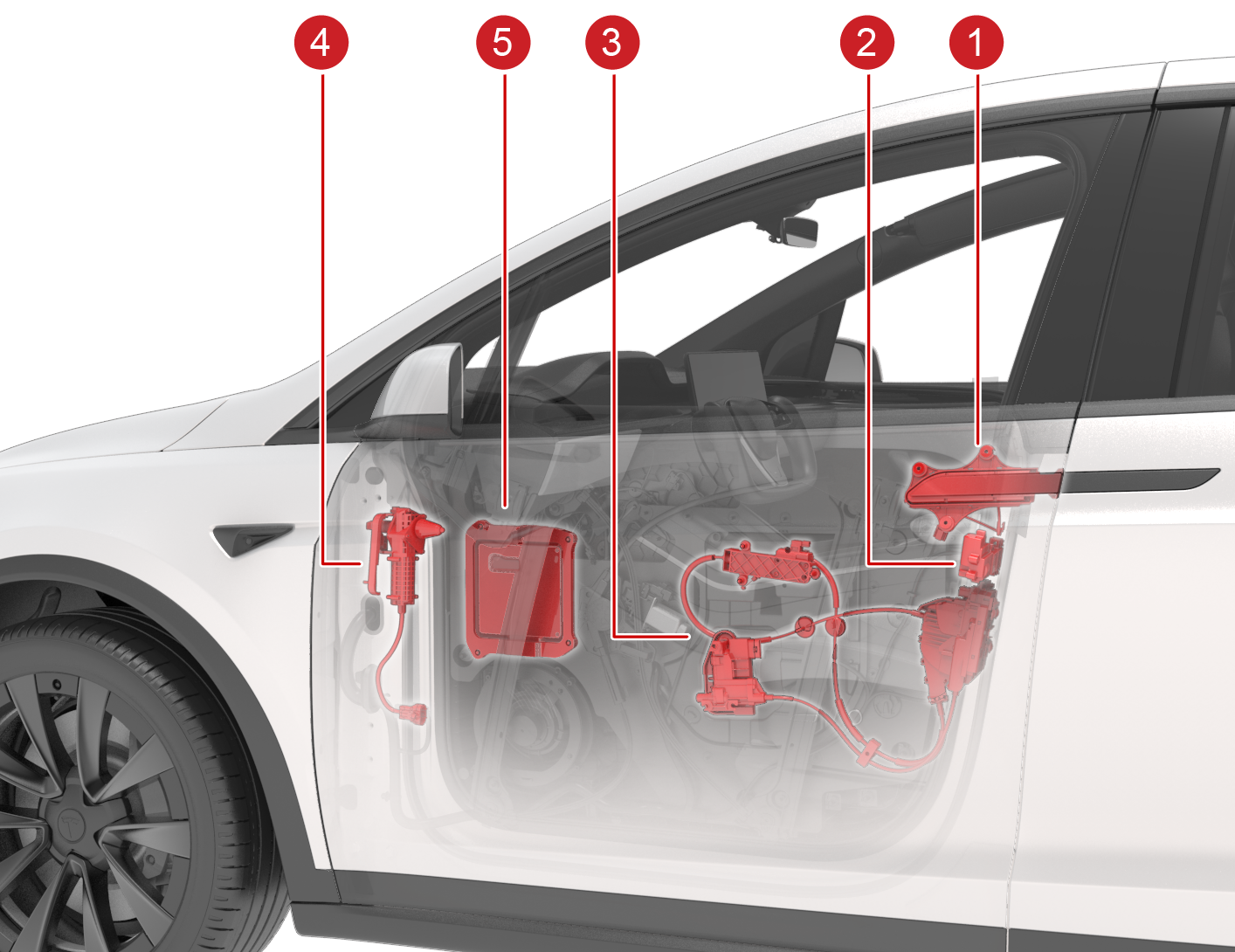
2021+ Model X features a power front door which allows for more usability and comfort in entering and leaving the vehicle than a conventional door. The door operation has the ability to work with 100% electrical operation, including all latches and movement actuation. The power front door system is comprised of a standard door mounted on free-moving hinges, powered by an electric DC motor (actuator). There is an exterior door push handle that is pressed to command the door to open from outside of the vehicle. There is a button on the interior handles used to open the doors when engaged. If the button malfunctions or there is no power supplied to the front doors, then there is a release cable which acts as a mechanical backup and releases the latch.
 |
|---|
| 1. Exterior door handle switch assembly 2. Door push actuator (ice-breaker) 3. Electronic latch and striker 4. Front door actuator (drive unit) 5. Front door controller (BCFDM / BCFPM) |
| Main components inside the front door |
Componentslink
Door Handleslink
Exterior door handlelink
 |
|---|
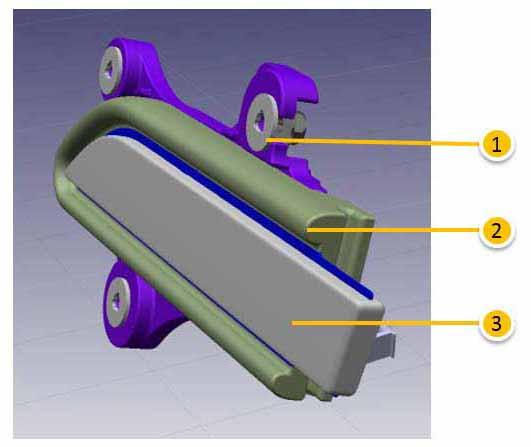
| 1. Rubber weather seal 2. Bezel 3. Micro switch (inside) |
| Door handle assembly |
The exterior door handle assembly has an integrated microswitch that is actuated when the door handle is pressed. There is a spring mechanism that is designed to return the handle to the un-pressed position immediately upon release. The door handle chrome bezel is replaceable and alignment is adjustable from adjustment screws behind the assembly and bezel.
Interior door handlelink
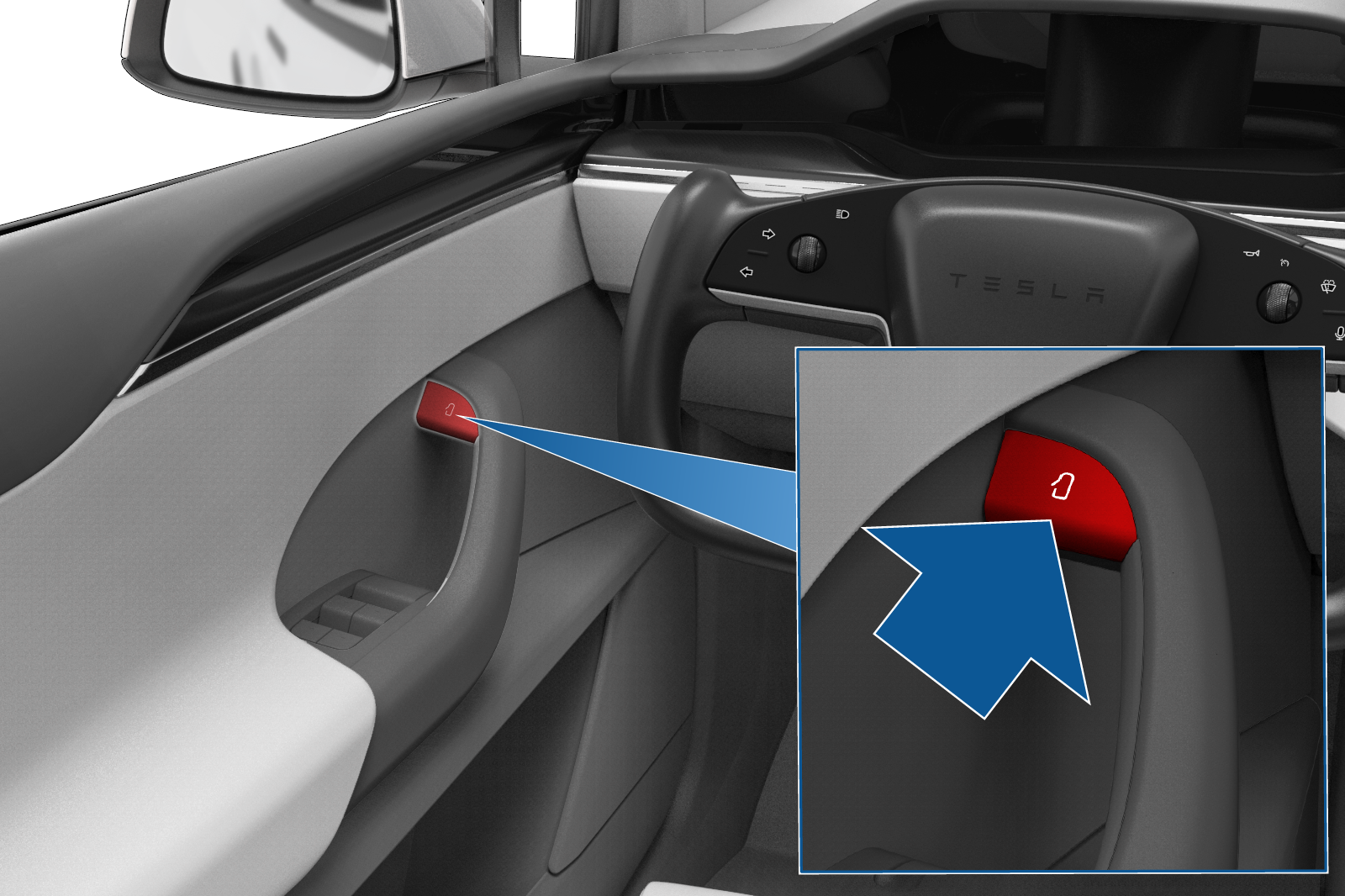
The front and rear doors feature a force touch button on the handles which is used to open the doors when engaged. The force touch button consists of:
- Capacitive sensor with haptic feedback
- Dedicated ECU
When the user applies pressure to the force touch button, the capacitive sensor receives this input and provides a haptic feedback in the form of a vibration to confirm the input was received. The dedicated ECU then communicates to the corresponding vehicle controller (VCLEFT, VCRIGHT) over LIN to release the latch.
Note:
- If the ECU is replaced in service, the firmware on the ECU must also be updated.
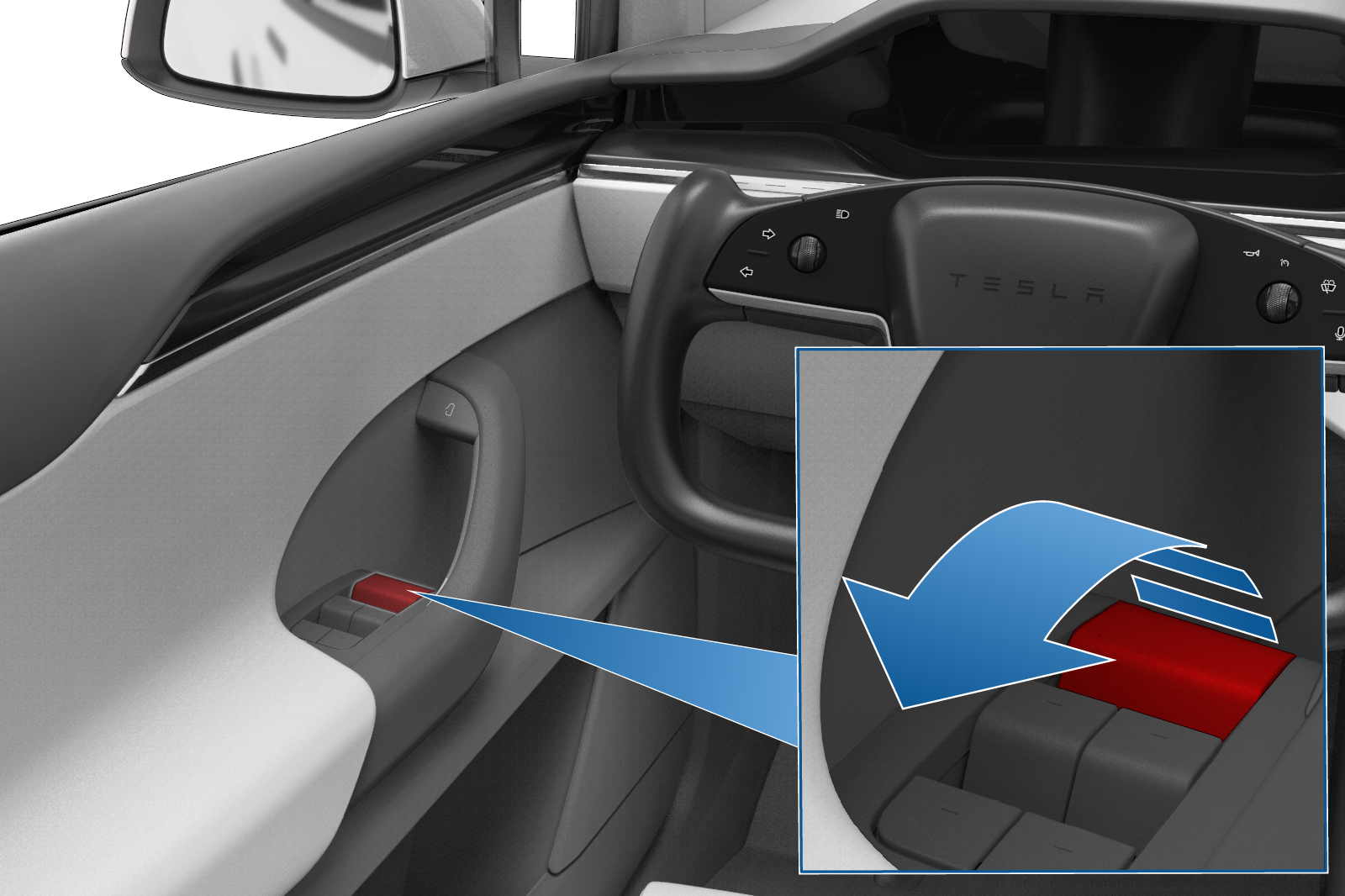
- If the switch malfunctions or power to the front doors is not present, there is a release cable which acts as a mechanical backup and releases the latch.
- Enabling the child-protection lock prevents doors opening from the rear door interior release handles. The only exception is in the event of an airbag deployment, which unlocks all doors and overrides the child-protection locks.
 |
|---|
| Front door switch release |
 |
|---|
| Mechanical backup latch release |
Door Latcheslink
Electronic cinching door latchlink
The front door latches are located inside each door. The latch is primarily electric, but a cable is connected to the latch from the front door interior release handle to open the door in case there is an electrical fault.
2021+ Model X front door latches have a cinch motor external to the latch assembly. Despite the cinch motor being external to the door latch, it is part of the latch assembly and therefore is non-serviceable. The release actuator is also external to the door latch but is a serviceable component. All other components such as gears, linkages, and the two position sensors are part of the latch assembly. 2021+ Model X front door latches are controlled directly by the corresponding door controllers.
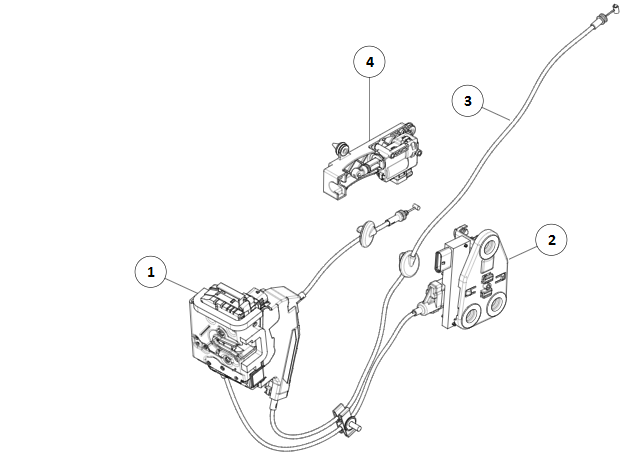 |
|---|
| 1. Front door latch 2. Cinch motor 3. Manual release cable 4. Release actuator |
| 2021+ Model X Front Door Latch Assembly |
Door latch strikerlink
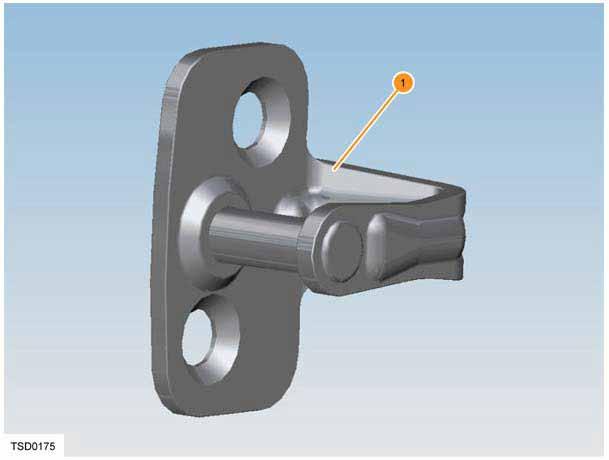 |
|---|
| 1. Front Door Striker |
The front door latch striker is located on the B-pillar and can be adjusted in the Y direction for door flush or in Z direction for closing effort, which will help prevent latch and striker misalignment.
Drive Unit (Actuator)link
The front door actuator uses an electric motor to drive a system of gears that actuates a rod connected to the upper door hinge. This is used to automatically open and close the front door.
An integrated magnetic damper prevents and slows actuation of the rod. This is used to hold the door in position once opened. This magnetic damper is always on when the door is not in motion. Motion can come from either manually moving the door or when the door actuator is commanded to move.
Warning
Before removing either the door actuator and / or the pin that secures the actuator to the door hinge, disconnect the actuator from the door harness to avoid unintended spindle motion that can damage the door components.
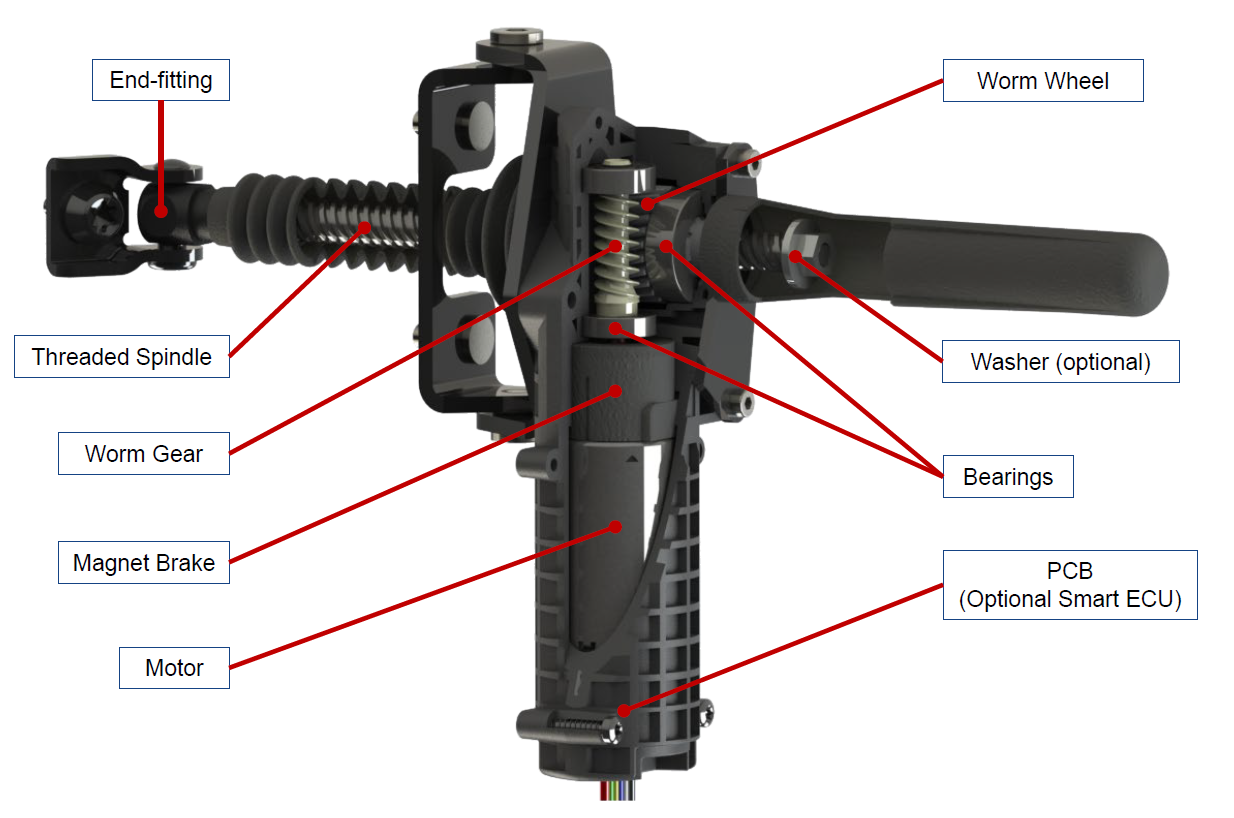 |
|---|
| Door Actuator Components - Front View |
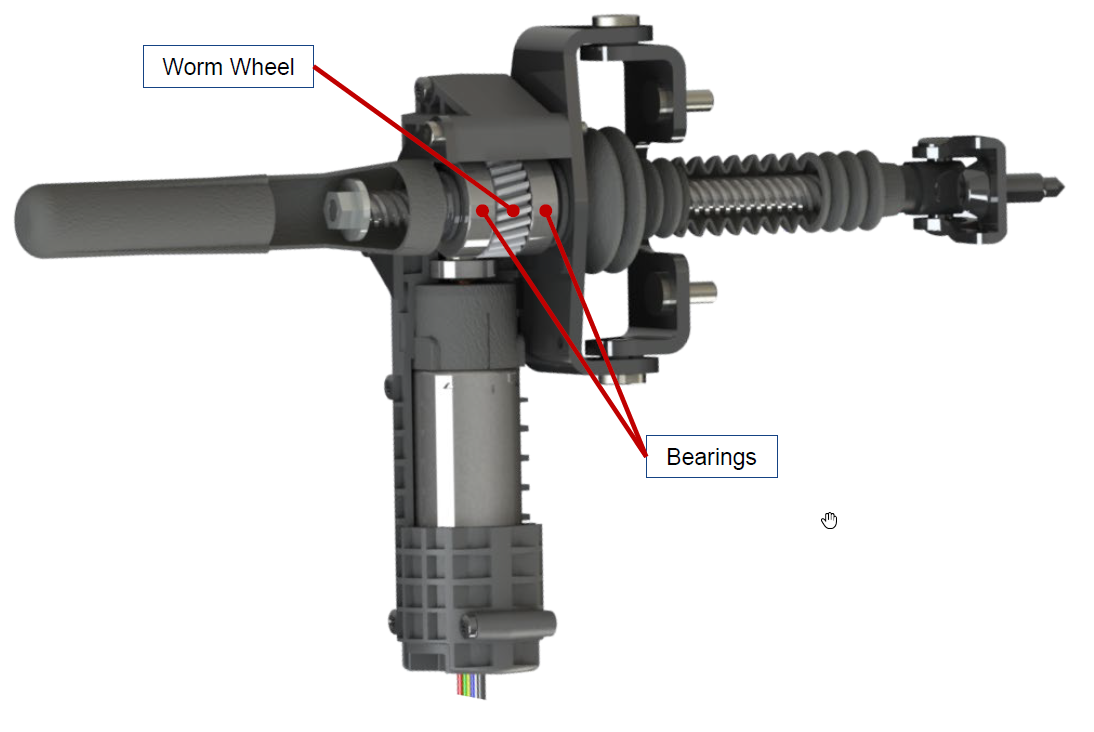 |
|---|
| Door Actuator Components - Rear View |
Front Door Controllerlink
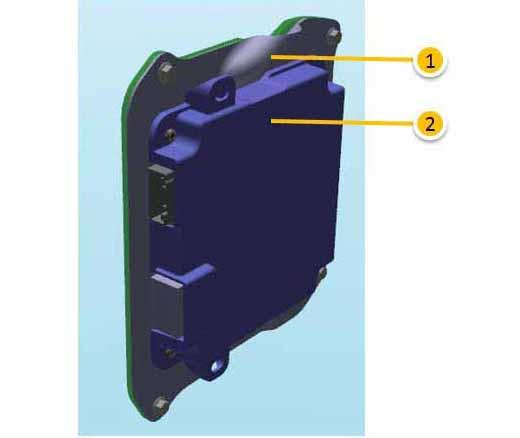 |
|---|
| 1. Heat sink plate 2. Control module |
The front door controller (BCFDM / BCFPM) is an Electronic Control Unit (ECU) that takes input from sensors and provides output to the drive unit and latch. There is one module for each front door which controls the respective front door side mirrors, window regulator, door actuator, latch, and ice-breaker actuator. The left and right front door controllers are the same except for the non-interchangeable heat sink plates. As a result, they have unique part numbers. Because the front door controllers are identical in terms of electronics, they need to know which door they are mounted to. This is done via two pins on each of the door modules. These pins are called 'Door ID 1' and 'Door ID 2' in the wiring diagram. One of the Door ID pins is connected to ground and the other is left open. The combination of Door IDs tell the door modules which side they are mounted to. An issue with any of these four pins could associate the controller to the other door which could result in unexpected behavior with the doors.
| Door ID 1 | Door ID 2 | |
|---|---|---|
| Front door controller - left | Ground | Open |
| Front door controller - right | Open | Ground |
Ice Breakerlink
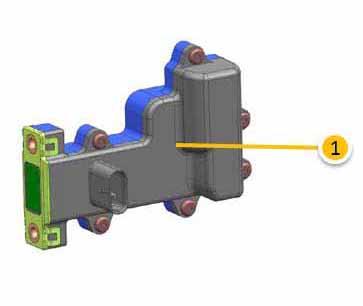 |
|---|
| 1. Ice Breaker Actuator |
The ice breaker is an electronic actuator that extends to apply force against the body B-pillar to push the door open in the case that the door frozen shut. The actuator is controlled by the corresponding front door control module using a 9V Pulse Width Modulation (PWM) signal.
Warning
When working on and around the ice breaker, exercise caution to prevent injury. Avoid touching the ice breaker in its extended position as it may lead to pinch injury.
Operationlink
Thresholdslink
- Convenience position: 19 degrees
- Auto Front Door open position: 45 degrees
- Full door open position: 70 degrees
- The door can operate up to 6 degrees up or a grade of 15% with the vehicle nose up
- Ice breaker retract angle: 6 degrees
- Under normal power operation, the door open velocity: 0.15 - 0.35 m/s
- Under normal power operation, the door close velocity: 0.45 - 0.65 m/s
Openinglink
The front doors can be opened in different ways:
- Opening from outside the vehicle by pressing the exterior door handle for at least 300 ms. This actuates the integrated microswitch.
- Opening from inside the vehicle by pressing the interior door handle button.
- Opening from inside the vehicle by pressing the 'door open' button on the vehicle touchscreen.
The corresponding front door controller receives the signal from any of the above inputs and commands the latch to release. Once the latch is released, the actuator powers the door open to the convenience position and the integrated magnetic damper then holds the door in position.
The user may then manually open the door by pulling or pushing the door as the door controller will detect the pull force and allow the door to be moved manually to the desired position. Once external force is no longer detected by the door actuator, the integrated magnetic damper will hold the door in position.
If an obstacle is detected (over-current event by actuator) during opening operation, the opening operation is stopped and the current position is held in place by the magnetic damper.
The door will only open when the vehicle is stationary.
Closinglink
The front doors can be closed in different ways:
- Closing from outside the vehicle by pressing the exterior door handle for at least 300 ms.
- Closing from inside the vehicle by pressing the interior door handle button.
- Closing from inside the vehicle by pressing the brake (only for the driver side door).
- Closing from inside the vehicle by pressing the 'door close' button on the vehicle touchscreen.
- Closing from either inside or outside the vehicle by manually pushing or pulling the door closed. The door actuator will detect the external push / pull force and allow the door to be closed manually.
- Closing from either inside or outside the vehicle by pressing the top button of the key fob.
The corresponding front door controller receives the signal from any of the above inputs and commands the door motor to close the door.
Auto Front Doorlink
The "Auto Front Door" feature automatically opens the driver door when approaching the vehicle as a chauffeur or taxi driver would do. This feature is compatible with a valid key fob and Phone as Key. The feature can be enabled and disabled by the user via the vehicle touchscreen.
Depending on the direction the vehicle is approached, the door will open in one or two stages:
- When approaching the vehicle from the rear of the vehicle, the driver front door will automatically open to the fully open position.
- When approaching the vehicle from the front of the vehicle, the driver front door will first open to the convenience position. This allows for enough space to pass the door. When the user walks past the front door and stands in front of the rear door and no obstacles are detected, the door will open to the fully open position.
The fully open position may vary depending on obstacles detected near the front door. The location of the user is determined by the detected key location and the rear door ultrasonic sensor.
Power Cinching Latchlink
The power cinching function is intended to enable the automatic completion of the door closure from secondary to primary latch. The cinch operation is controlled from within the latch. To initiate cinching, bring the door to engage the secondary latch.
The latch mechanism can always function in a conventional manner in that the power cinch can be bypassed and operating the manual release as usual. Slamming the door to primary latch always bypasses the cinch operation.
Door Operation in Different Conditionslink
Windy environments: The door actuator limits speed of motion in the opening direction if moved too quickly by external force. This limit is meant to prevent the wind from swinging the door open too fast. This limit does not apply in the closing direction in order to allow the door to be slammed by the user.
On grade: The front door controller has an integrated accelerometer that is used to detect the vehicle grade (incline, decline, tilt). Based on the grade of incline, decline, and tilt, the door actuator power will be applied as necessary for smooth operation of the door.
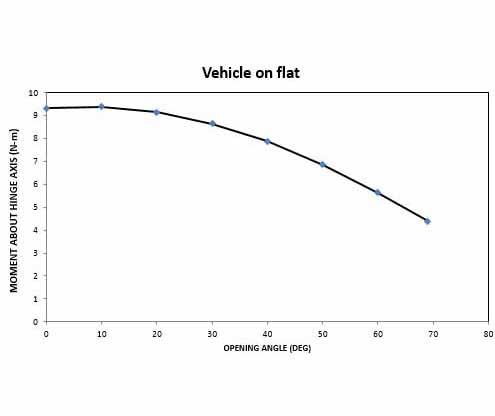
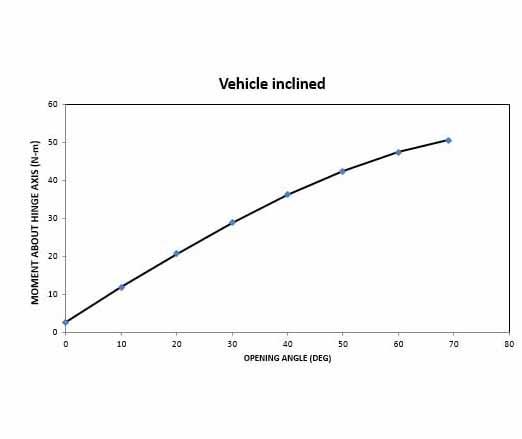
The torque of the hinge axis of the door varies depending on the opening angle of the door as well as the tilt and incline or decline grade. For example, Figure 1 below shows the torque on the hinge axis of the front door as the door opens to its full open position. It shows how the motor delivers a higher torque when the door angle is small and that the torque decreases as the door opens. This is due to the geometry of the actuator rod between motor and door. Figure 2 shows the same torque but on a 10% grade nose upwards. Note that the scale of the y-axis is much larger. The further the door opens, the more torque the motor needs to deliver. This is because gravity has a larger effect on the door as it opens. Similarly, the torque curves vary for all ranges of vehicle orientation.
 |
|---|
| Figure 1 |
 |
|---|
| Figure 2 |
Obstacle Detectionlink
The door can detect obstacles in different ways.
- Actuator overcurrent: The front door controller can detect an obstacle in the way of closing or opening operations by monitoring the door actuator current for an overcurrent event which will indicate an external force against the opening or closing operation. The door closing or opening operation will stop before it reaches the force threshold level of exertion on the obstacle. If the door detects an object via the actuator overcurrent event during the close operation, the door actuator will stop and reverse approximately 5°.
- Door controller accelerometers: The front door controller has an integrated accelerometer that is used to detect an external force on the door during closing or opening operation for obstacle detection.
Door Unzeroedlink
When the power front door has lost its calibration, it is said to be "unzeroed". This means that the door module does not know the position of the door. This can happen when the door controller goes to sleep while a front door was open, when the door module was reset while the front door was open, or while the measured door opening angle is outside the expected range. When the front door is "unzeroed," the powered operation and automatic operation are disabled but the door motor will continue to allow manual operation. The front door can simply be re-calibrated by closing the door manually.
Ice Breakerlink
The ice breaker is a plunger inside the front door that extends to apply additional opening force against the B-pillar of the body. Since 2021+ Model X does not have pullable door handles, the ice breaker helps open the doors and ensures that the doors will still open in the case of ice freezing the door shut. The ice breaker actuator is activated when the door is determined to be blocked upon latch release.
Ice breaker functionality overview:
- Door is commanded to open but the door latch does not report that it is in the unlatched position within a certain amount of time.
- The door latch will be commanded to release once more.
- If the door latch still does not report to be in the unlatched position within the same amount of time, the latch actuator will hold the latch open and the ice breaker will extend.
- The ice breaker retracts when the front door angle exceeds to "ice breaker retract angle" or when the encoder is sensing that the door is moving towards the closing position.
- In the case that the door is unzeroed, the door module doesn't know the open angle of the door and therefore cannot determine the previous conditions. In that case, the ice breaker retracts when the door is commanded to close via the interior door button, exterior door handle, touchscreen, or brake press.
The ice breaker on 2021+ Model X uses a switched circuit to ground to determine what position the ice breaker is in. The switch on this circuit is located internally to the ice breaker and is normally an open (NO) switch. When the switch is in the rest position (retracted), the switch is in the open state. When the actuator extends, it closes the switch and completes the circuit to ground.
If there is an issue with the ice breaker or its actuator, the door may not open or close as expected, the ice breaker may not extend or retract as expected, the ice breaker may not move at all, or the movement of the ice breaker may be intermittent.
Crash Responselink
The interior and exterior releases are both disabled during a crash event.
- For the exterior release, latch release is disabled within 50 milliseconds of a “crash active” event and remains disabled until 10.5 seconds after the “crash active” event.
- For the interior release, key fob release request, and media control unit (MCU) release request, movement of the door and latch release request is disabled 300 milliseconds after a “crash active” event and remains disabled for 450 milliseconds after the “crash active” event.
All doors and rear trunk will unlock within 100 ms of a “crash active” event and all lock requests are ignored for 10 seconds after the “crash active” event.