Wheelslink
Last updated: September 18, 2024
Note
Tesla does not recommend using aftermarket wheels or tires. Wheels and tires are specifically engineered to meet the requirements of the vehicle. Using aftermarket components may yield reduced performance in other aspects of the vehicle.
Road Wheelslink
Wheels Overviewlink
The road wheels on Palladium X are all cast aluminum alloy with a stylistic coating and are staggered (rear road wheels are wider than the front).
The owner can change the road wheels configuration on the display by using the touchscreen: Controls > Service > Wheel Configuration
Then select from the drop down menu the correct size and pattern of the road wheel. This allows the vehicle to learn the new set up and also changes the avatar on the UI and Tesla Mobile App.
The wheel type can be identified with the cfg\_wheeltype vehicle configuration.
Note
Changing the road wheel configuration can have an impact on range estimates and pressure warnings.
Road Wheel Component Configurationslink
2021+ Model X has 2 road wheel size options:
- 20 inch wheel
- 22 inch wheel
Current list of road wheels available (listed by configuration name):
-
cyberstream_20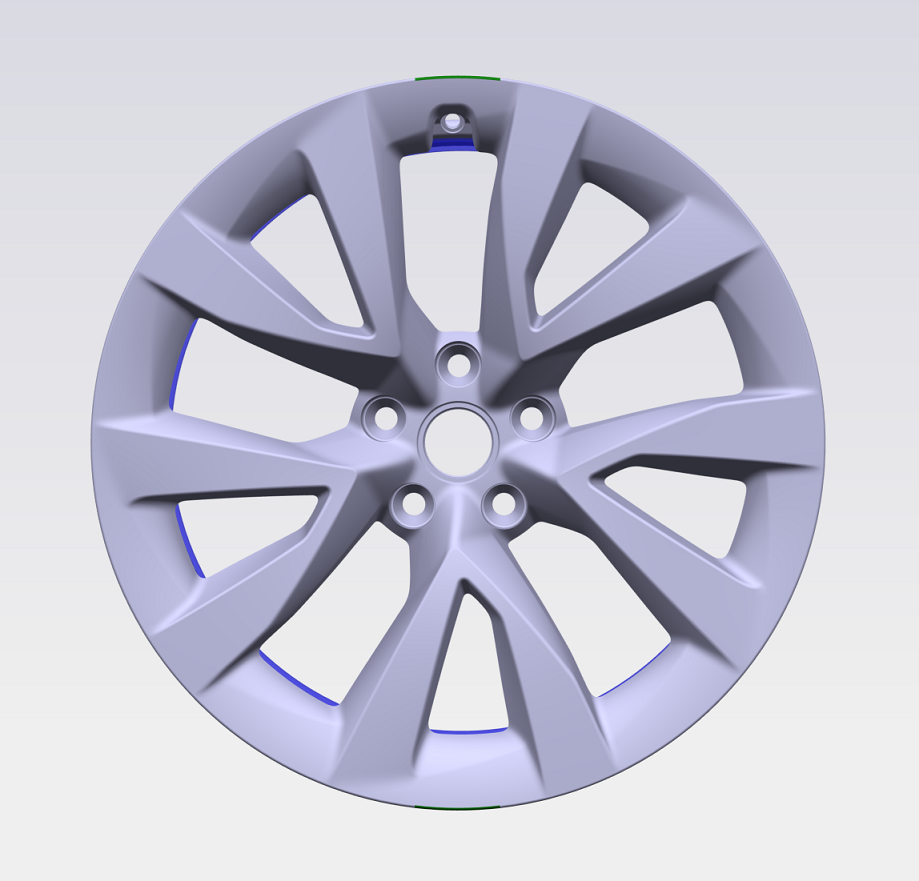
Cyberstream
Front = 20 x 9.0J and ET +40
Rear = 20 x 10.0J and ET +35 -
new turbine_22_black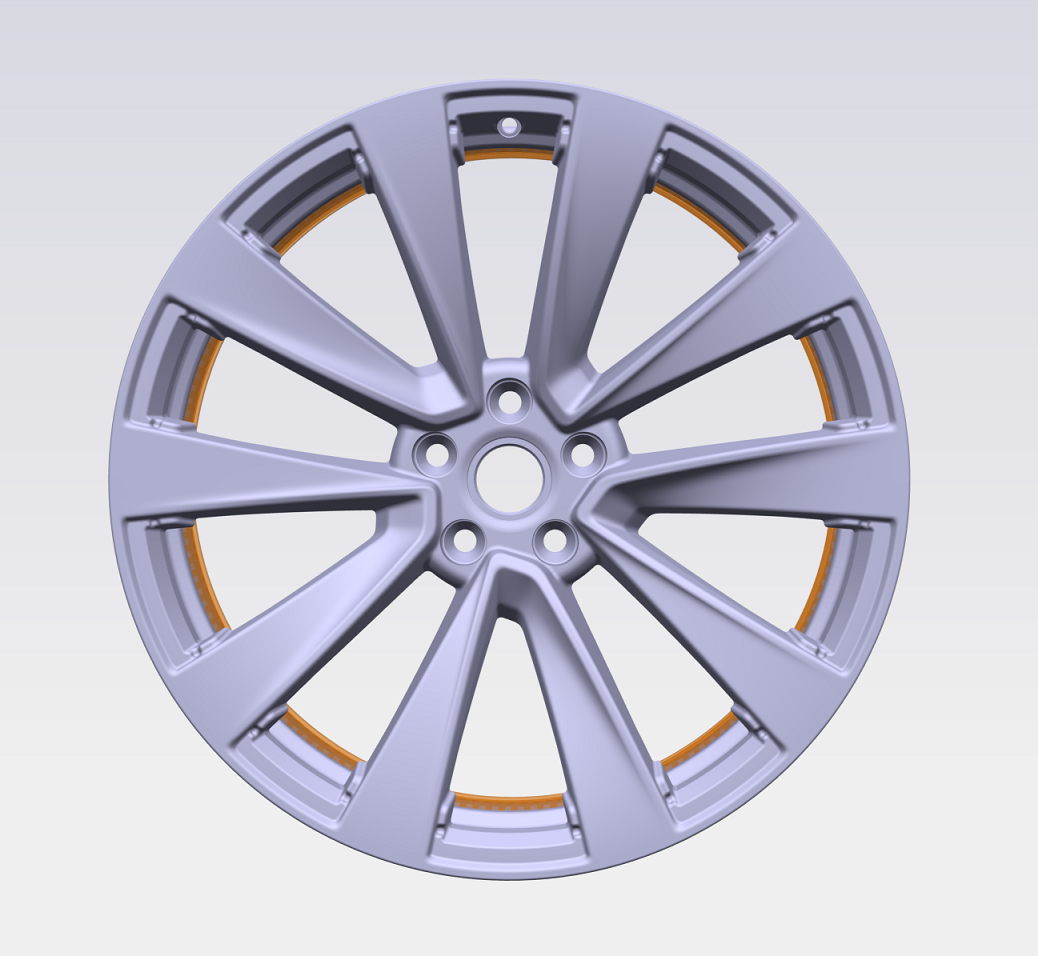
New Turbine
Front = 22 x 9.0J and ET +40
Rear = 22 x 10.0J and ET +35
Road Wheel Specificationslink
The sizing of each wheel is stamped on the inside of each rim and are recorded as follows in this example:
Sizelink
20 x 9.0J
- 20 is the diameter in inches from one side of the rim to other passing through the center of the rim and excluding the tire.
- 9.0 is the width in inches from the outside rim to the inside rim.
- J is the tire bead profile of the wheel designated letter = passenger cars.
Offset/ETlink
ET40
The offset or einpresstiefe (ET) refers to the distance in millimeters from the wheel center line to the mounting surface, the offset can be either neutral, positive, or negative.
- Zero offset – mounting face is exactly in the center of the wheel.
- Positive offset – mounting face is positioned closer to the outside of the wheel.
- Negative offset – mounting face is positioned closer to the inside of the wheel.
Pitch Circle Diameterlink
5x120
Pitch Circle Diameter (PCD) is the quantity of wheel fixings per wheel and the diameter of an imaginary circle that passes through the center of each of those fixings.
5x120 PCD will take five wheel fixings, at a diameter of 120mm.
Warning
Fitting rims with road wheel specifications that are different than original equipment will induce higher loads onto suspension components which could result in accelerated wear to nearby suspension, braking components, and tire wear.
Serviceabilitylink
If the road wheel sustains slight cosmetic damage to the stylistic coating, there is no effect on the overall wheel functionality, but any further damage noted to the structure other than cosmetic would require inspection by Service as these are not serviceable in any way and must be replaced if damaged.
Any repairs needed could negatively affect the physical structure of the road wheel, this also includes chrome plating and powder coating.
Note
For more information, see the latest service information on Approved Tire and Wheel Repairs.
Deep gouging, cracks, or off-round road wheels could be indications of an impact. If a road wheel is damaged in this way, the rest of the vehicle will need inspection for damage as well. Even if the suspension looks undamaged, the wheel alignment should also be checked and, if necessary, adjusted.
Tireslink
Tires Overviewlink
The diameter of a tire has to match the diameter of the road wheel, this is recorded as a 2 digit number and is in inches.
A range of tire widths can be used on the same road wheel width, however only one size is truly optimal for a particular width. This is recorded as a 3-digit number and is in millimeters. If the tire width is not appropriately matched to the wheel, the sidewalls will experience deformation which can lead to increased rolling resistance, lower traction, and decreased comfort. Additionally, incorrect tire sizing may result in damage to surrounding components.
The aspect ratio, is the height of the tire sidewall given as a percentage of the tire width. This ultimately impacts the overall diameter (and thus circumference) of a road wheel and tire combination. This is recorded as a 2-digit number and is the sidewall height as a percentage of the tread width. So, for example, if the tread width is 255mm, and the aspect ratio is stated as 45, the sidewall height will be 115 mm.
Having a circumference that is different than the specified size will result in inaccurate speedometer readings. Furthermore, if the ratio of the front to rear circumferences differ from the specification this relative road wheel speed could cause vehicle systems that rely on accurate road wheel speed measurements to not function correctly. This could includes:
- Electronic Stability Program (ESP) and its associated sub-systems
- Tire Pressure Monitoring System (TPMS)
- Range
Tire Markingslink
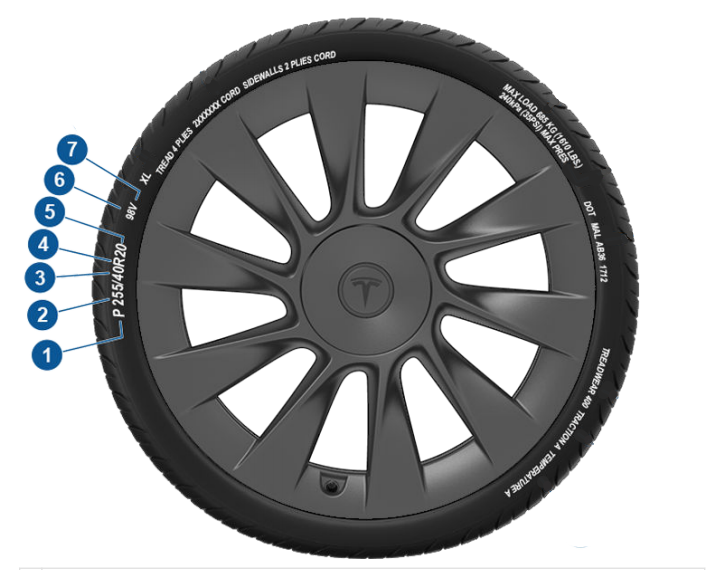
Laws require tire manufacturers to place standardized information on the sidewall of all tires. This information identifies and describes the fundamental characteristics of the tire. The below image shows the main ones to look out for, additional markings could be regional specific.
 |
|---|
| 1. Tire category. P indicates that the tire is for passenger vehicles. 2. Tire width 3. Aspect ratio 4. Tire construction. R indicates that the tire is Radial ply. 5. Wheel diameter 6. Load index, this 2 or 3-digit number is the weight each tire can support. 7. Speed rating, this single letter indicates the maximum speed (in mph) at which the tire can be used for extended periods. |
| Tire Markings |
Tire Sizing and Pressurelink
Tire pressures are specified as a Recommended Cold Pressure (RCP) which means that the pressures should be checked and adjusted when they are cool to ambient temperature (~70° F / ~20° C).
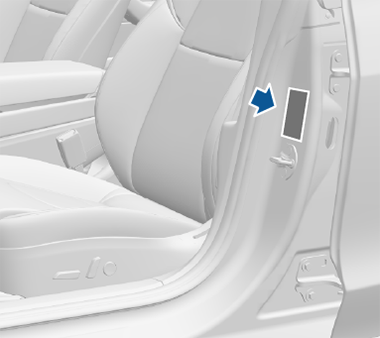
The most reliable source for the specification of tire pressures for a vehicle is the Tire and Loading Information label located on the Driver side B-Pillar.
If there is a discrepancy between this information and any other source, default to the information on this label.
 |
|---|
| Tire Label Drivers B-Pillar |
Note
Incorrect tire pressures can impact grip, efficiency, comfort, and wear.
Tire Wearlink
Tires are wear items and as such require regular inspection due to wear caused to the tread by a combination of any of the following:
- Driven mileage
- Age from manufacture
- Under or over air inflation
- Misalignment of wheel geometry
- Misuse
- Incorrect sizing
This wear of the tread can reduce vehicle performance or make the vehicle unstable in any road condition, but especially in adverse weather.
Most tires come with tread indicators, which are a special pattern in the tread blocks that show when the minimum acceptable tread depth has been reached this is when they are flush with the surrounding tread.
Tip
It is recommended to replace the tires before the wear indicators are visible.
The tire sidewall also needs regular inspections for signs of bulges, distortions or cuts. If any of these are found then the tire needs replacing.
If replacement is due to abnormal wear to the tread, then the wheel alignment will need to be checked after the relevant tires have been replaced.
Serviceabilitylink
Tires generally require an infrequent 'top up' of air pressure over time, if more frequent air loss is detected this could either be due to a puncture of the tire by a foreign object or of a defect in the road wheel.
If the air loss has been identified as being from the tire, then under certain specific criteria these can be repaired, please refer to the following:
- Up to date Service Information documents
- Online Tesla Service Manual
- Consult local laws
If it does not fall in this criteria, then the tire needs replacing.
If the air loss has been identified as being from the road wheel, then this will need replacement as repairs, other than cosmetic, are not authorized.
When fitting tires on a road wheel, the tire must also be balanced. Balancing involves using a machine to measure the amount and direction of vibration a road wheel and tire combination has when spun and then using this information to attach weights to the wheel to offset the imperfections.
Refer to the Service Manual for instructions on balancing a tire.