Front Trunklink
Last updated: October 20, 2023
Hood (Front Trunk) Latchlink
Latch Generations Overviewlink
There are two different generations of the hood latch design on the Model S.
- The 1st generation, called the "momentary" latch and has a double striker assembly, is built on Rear Wheel Drive vehicles built before 16 April, 2016.
- The 2nd generation, called the "continuous" latch and has a single striker assembly, is built on Dual Motor vehicles built before 16 April, 2016 AND on every vehicles built after 16 April, 2016
The hood latch generation can be determined by visually inspecting the number of the striker under the hood.
The Body Control Module (BCM)/SEcurity Controller (SEC) determines the control logic used by reading pin 6-20 'FEM2 Switch GND' and checks whether it is grounded (2nd generation - continuous) or not grounded (1st generation - momentary). When the Model S changed from a "momentary" latch to a "continuous" latch the driving logic from the BCM/SEC controller changed as well.
The BCM reads the status of pin 'FEM2 Switch GND' to see what latch type is installed and saves this information in the memory. From that moment on, the BCM trusts its memory and does not look at the status of the pin until one the following situations happen:
The BCM updates the hood latch configuration when:
- The BCM firmware is updated.
- 'Pektron ECU Configuration' procedure is run from Toolbox Desktop Application.
1st Generation (Double striker)link
Component Descriptionlink
The hood striker is locked on the underside of the hood and can be adjusted for alignment. Both hood latches are electrically operated by the BCM. When the hood is opened from the touchscreen or the key fob, both latches are released and the spring in the secondary latch pushes the hood up so that the striker is past the secondary catch; the hood can simply be lifted open. The primary latch also has a manual release cable attached to it in case electrical power is lost. If the manual release is used, the secondary hood latch must also be manually released to open the hood. There is also an emergency interior release button that can be actuated from inside the front trunk area.
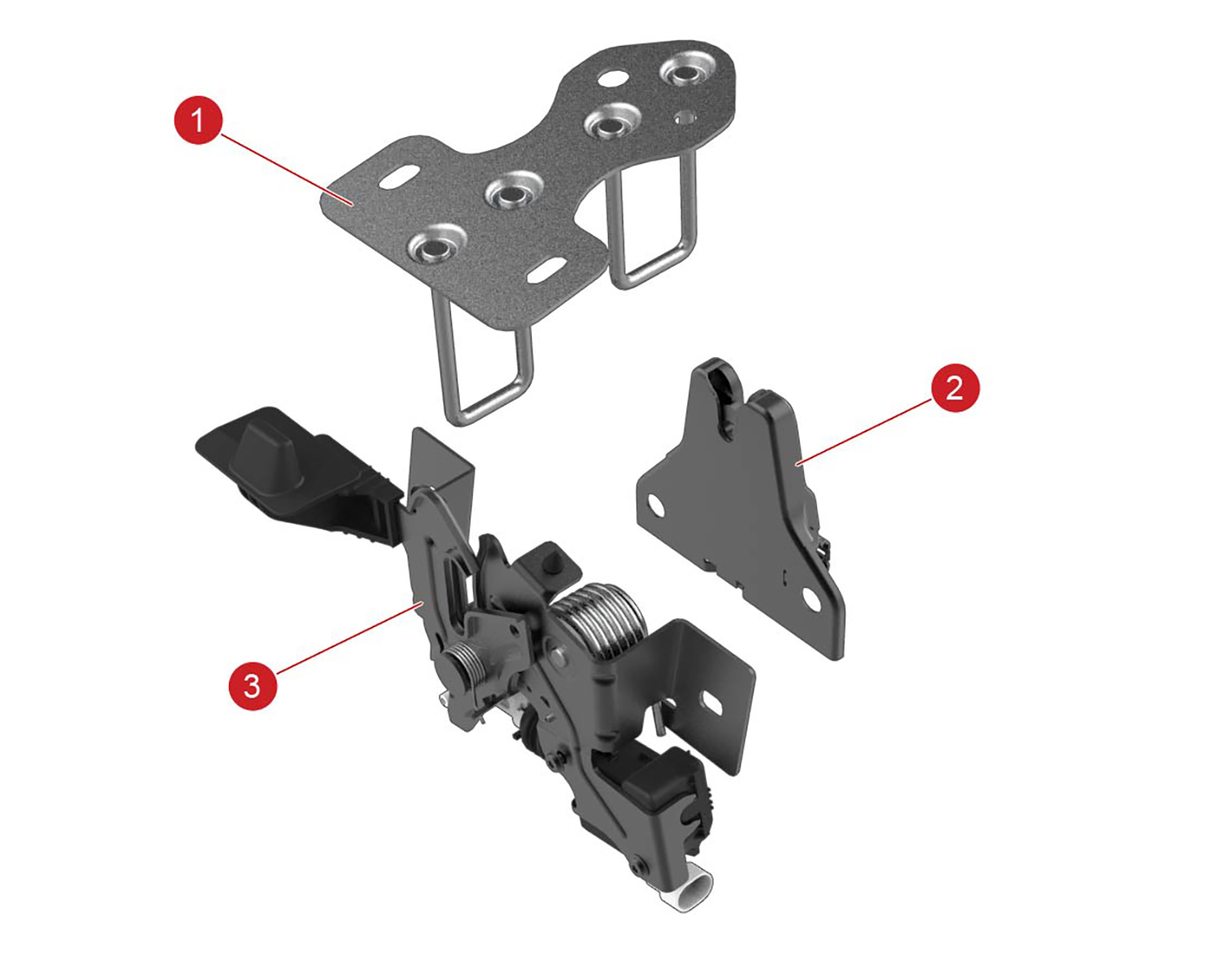 |
|---|
| 1. Hood striker 2. Hood latch 3. Hood secondary catch |
Component Operationlink
There are 4 methods of opening the front trunk:
- Press the front trunk area on the key twice quickly. This releases the primary and secondary latches and allows the hood to be lifted.
- Touch CONTROLS > FRONT TRUNK on the touchscreen.
- Press the interior emergency release button. If pressed while the vehicle is driving then only the primary latch is released to allow air to pass through and it is only when the vehicle in park that the secondary will also release. If pressed while not driving, both primary and secondary latches are released.
- Pull the backup mechanical release lever below the glove box. This is only needed during electrical failure, or if the front trunk cannot be opened using the touchscreen or key. Once the front trunk latch is released, move to the front of the vehicle, lift the hood slightly, and push down on the secondary catch lever. The hood can be lifted.
Note
If the release lever is used to open the hood when the Model S is locked and the alarm is active, the alarm sounds.
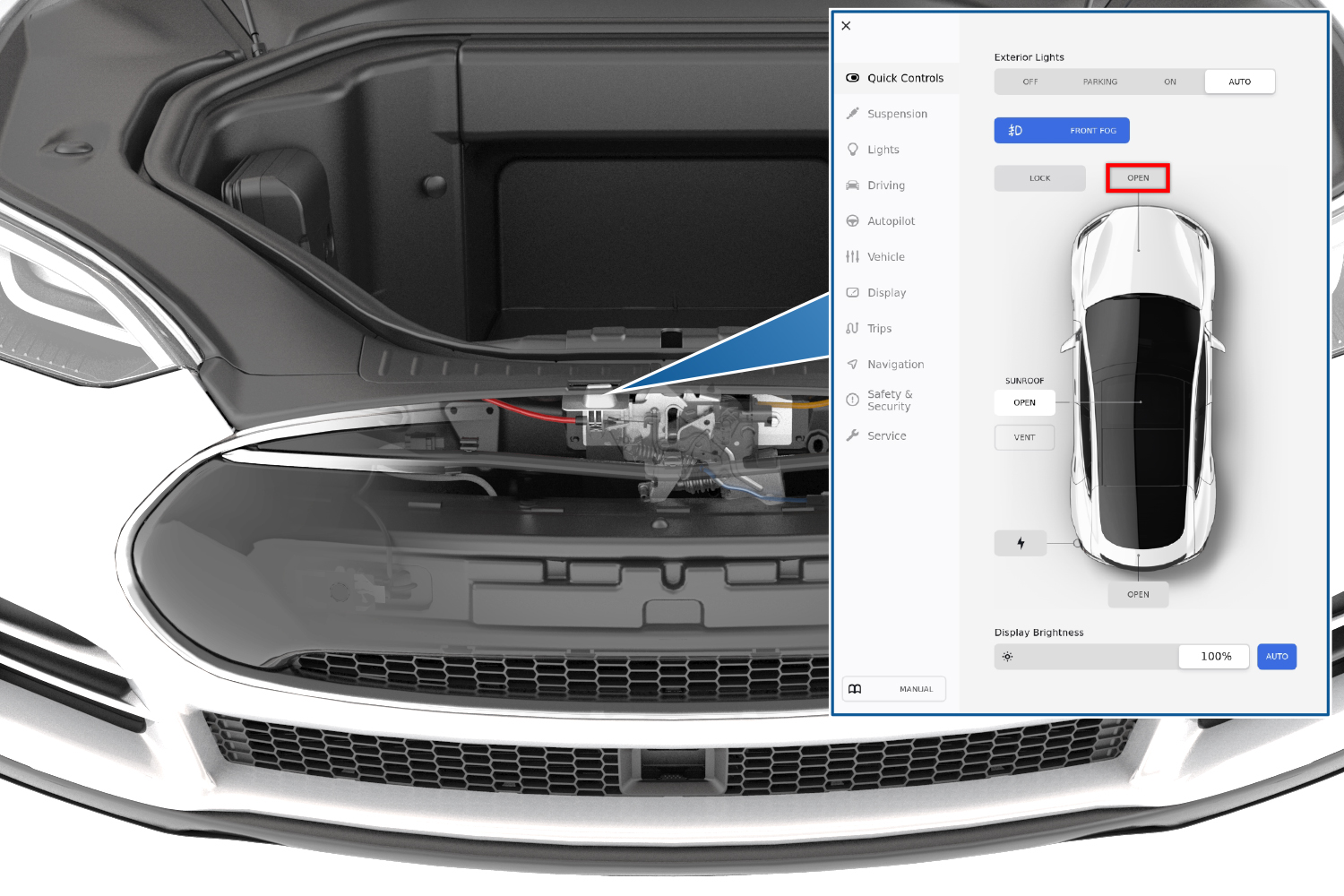 |
|---|
| Hood release button on the MCU |
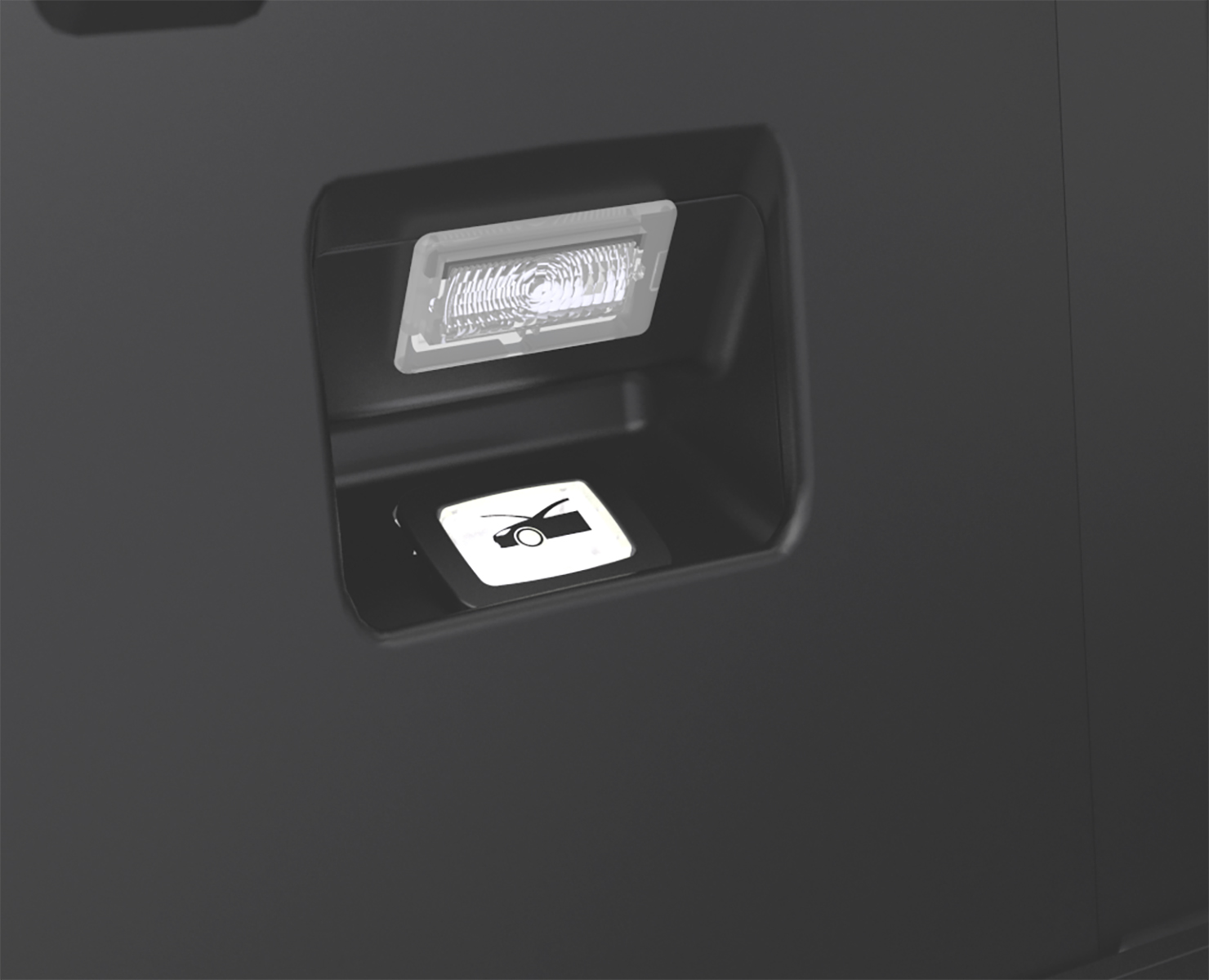 |
| Hood internal emergency release button |
Lower the hood to the closed position and then push down gently on both sides of the hood to engage the primary and secondary catches. The catches click into position.
Do not push at the very edge or very center of the hood. The hood is aluminum and can be damaged if too much force is applied in one small spot.
Warning
Do not drive the Model S with the hood retained by the secondary catch alone. Lift the front edge of the hood to ensure that it is correctly closed.
Hood Mechanical Releaselink
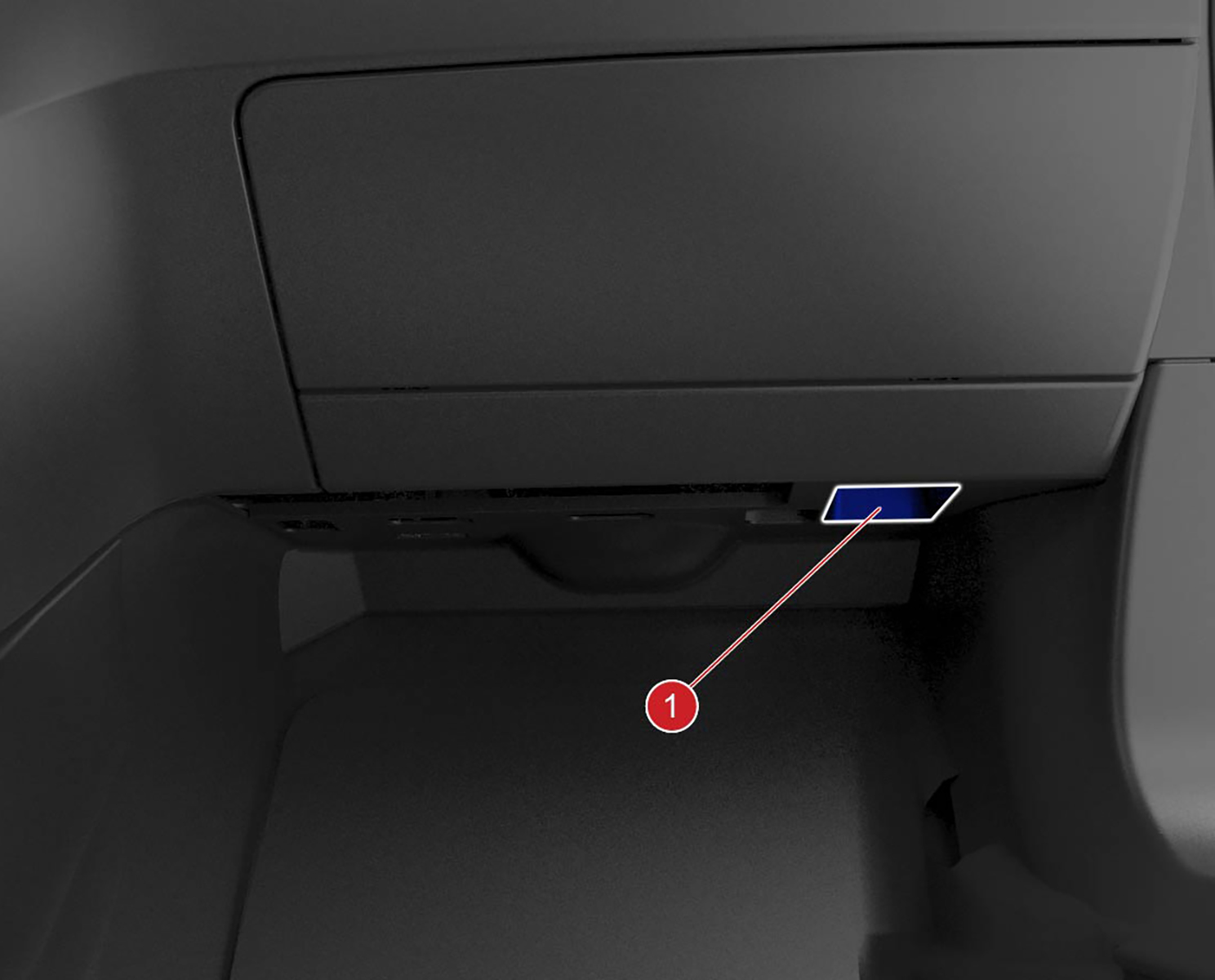 |
|---|
| 1. Hood release lever |
The backup mechanical release lever for the front trunk is located below the glove box.
- Pull the lever.
- Move to the front of the vehicle.
- Lift the hood slightly.
- Push down on the secondary catch lever.
- Lift the hood to open.
2nd Generation (Single striker)link
Component Descriptionlink
The hood latch is a single component with built-in primary and secondary latches that are electrically operated by the Security Controller (BCM). The single hood striker is located on the underside of the hood and can be adjusted for alignment.
The double latch system and toggle of the strut is designed to prevent the hood from opening when driving. The hood is held closed by the linkage of the gas strut and needs to be manually opened before it applies enough force to open and hold the hood up. When the hood is opened from the touchscreen, key fob, or mobile application, both latches are released, and the spring in the secondary latch pushes the hood up so that the striker moves past the secondary catch.
The hood latch has a single switch detecting the position of the primary latch. When the latch is closed (hood's striker engaged in the primary latch) the switch will be closed and when the primary latch is open (hood's striker not engaged) it will also be open.
The release actuators are simple motors pulling on a release cable to open the hood when commanded to. There are two release actuators and release cables, one for each latch mechanism (primary and secondary).
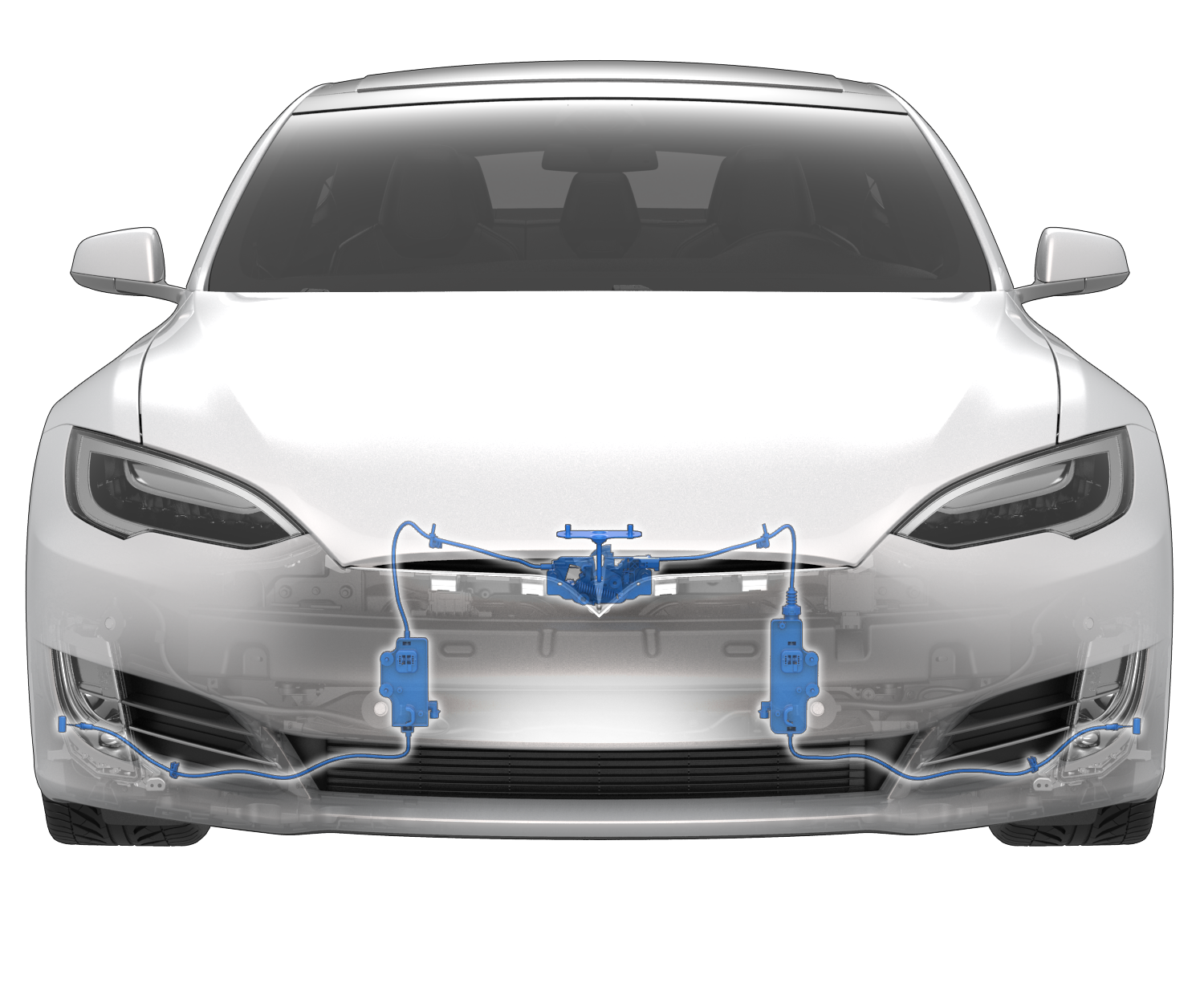 |
|---|
| 2nd generation hood latch assembly component locations |
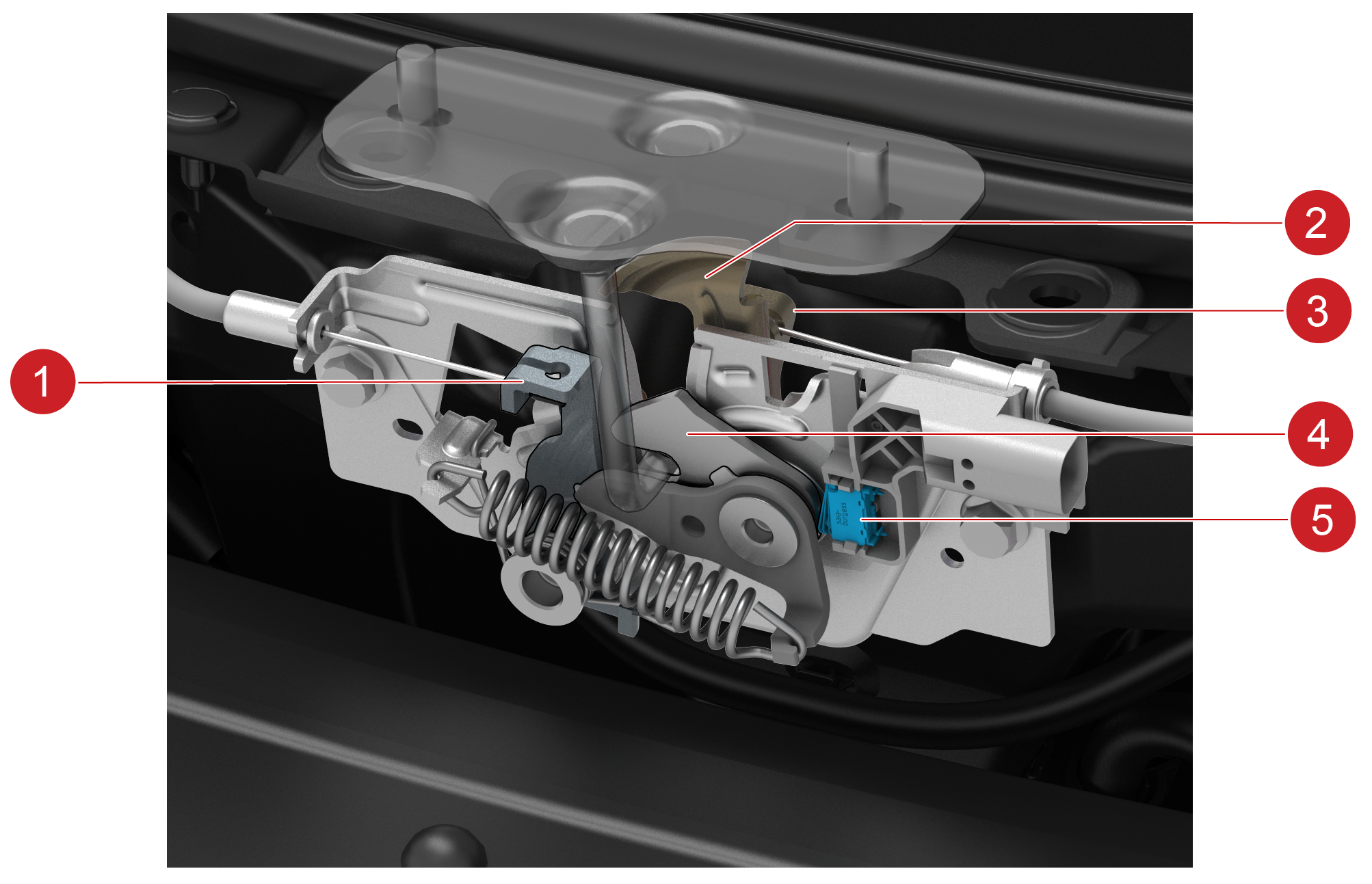 |
| 1. Primary Pawl 2. Secondary Catch/Hook 3. Secondary Pawl 4. Primary Claw 5. Latch engagement micro-switch |
| Hood latch component |
There are two emergency release cables routed from the lower end of the release actuators to the back of front side inner fenders. They can be used to open the hood latch in case of 12V power loss. There is also an emergency interior release button that can be actuated from inside the front trunk area.
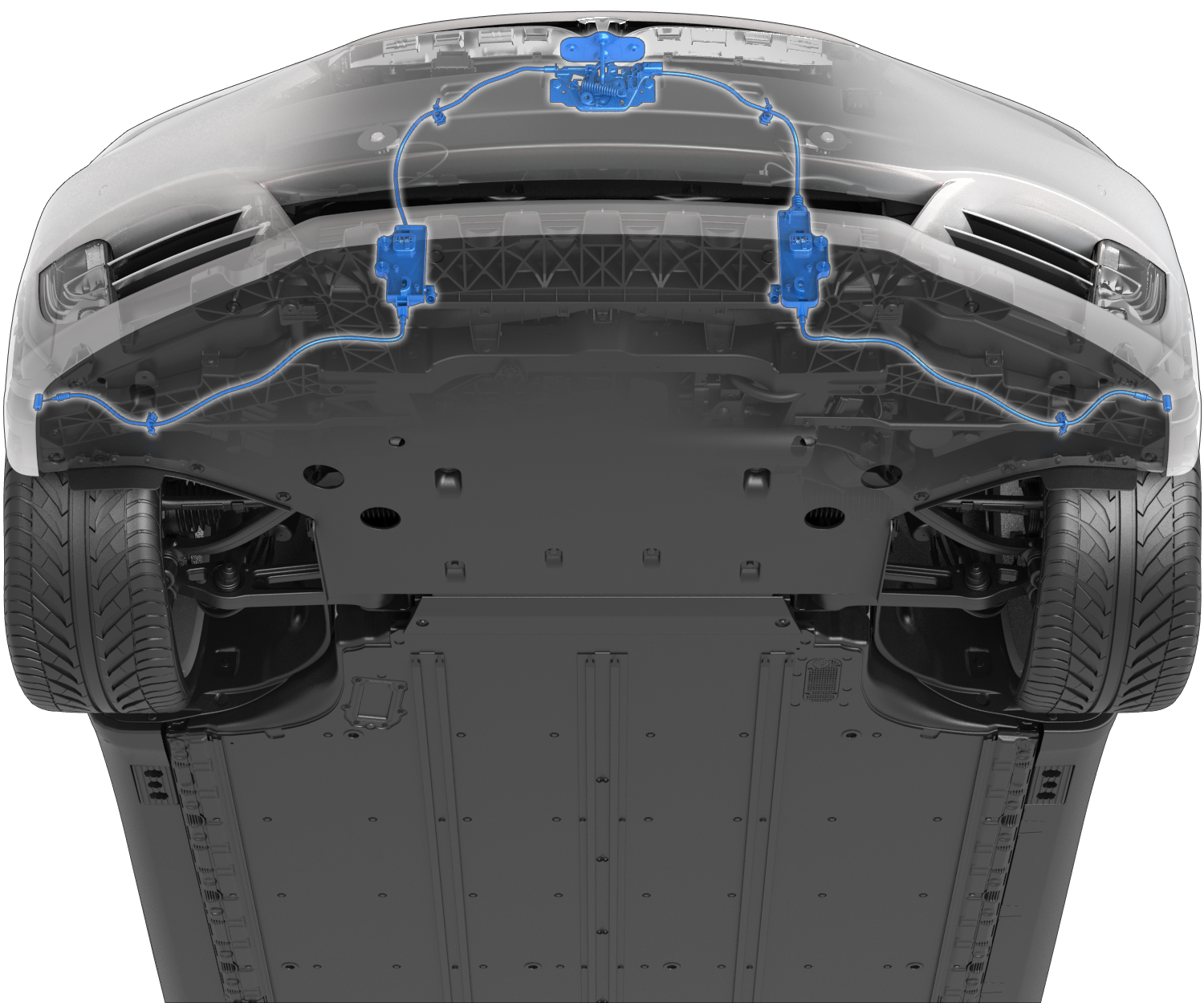 |
|---|
| Emergency release cables routing |
Note
The hood status is based on the primary latch status. The hood can be reported as open while still being engaged in the secondary latch.
Component Operationlink
There are 4 methods of opening the front trunk:
- Press the front trunk area off the key fob twice within 500 ms.
- Touch CONTROLS > FRONT TRUNK on the touchscreen.
- Press the interior emergency release button. If pressed while the vehicle is driving then only the primary latch is released to allow air to pass through and it is only when the vehicle in park that the secondary will also release. If pressed when not driving both primary and secondary latches are released.
- Pull the primary emergency release cable (right side) and then the secondary emergency release cable (left side). This is only needed during electrical failure, or if the front trunk cannot be opened using the touchscreen, key fob, or mobile application.
Note
If emergency release cables are used to open the front trunk when the vehicle is locked and the alarm active, the alarm will sound.
Upon reception by the Security Controller (BCM) of the opening signal, both the primary and secondary latches are driven according to a pre-defined sequence.
Primary on receipt of Release command:
- Drive Open for 400ms.
- Drive latch closed for 125ms.
Secondary on receipt of Release command (only if not moving):
- Wait for 300ms.
- Drive Open for 400ms, pause for 100ms and drive Open for another 20ms (to mitigate latch potentially bouncing back).
- Wait for 5 minutes unless:
- Primary latch reports closed
- Gear leave Park
- Vehicle is locked
- Drive latch closed for 200ms.
Lower the hood to the closed position and then push down gently on both sides of the hood to engage the primary and secondary latches. Do not push at the very edge or very center of the hood. The hood is aluminum and can be damaged if too much force is applied in one small spot.
Warning
Do not drive the Model S with the hood retained by the secondary catch alone. Lift the front edge of the hood to ensure that it is correctly closed.