Exteriorlink
Last updated: September 18, 2024
Fascias and Underbodylink
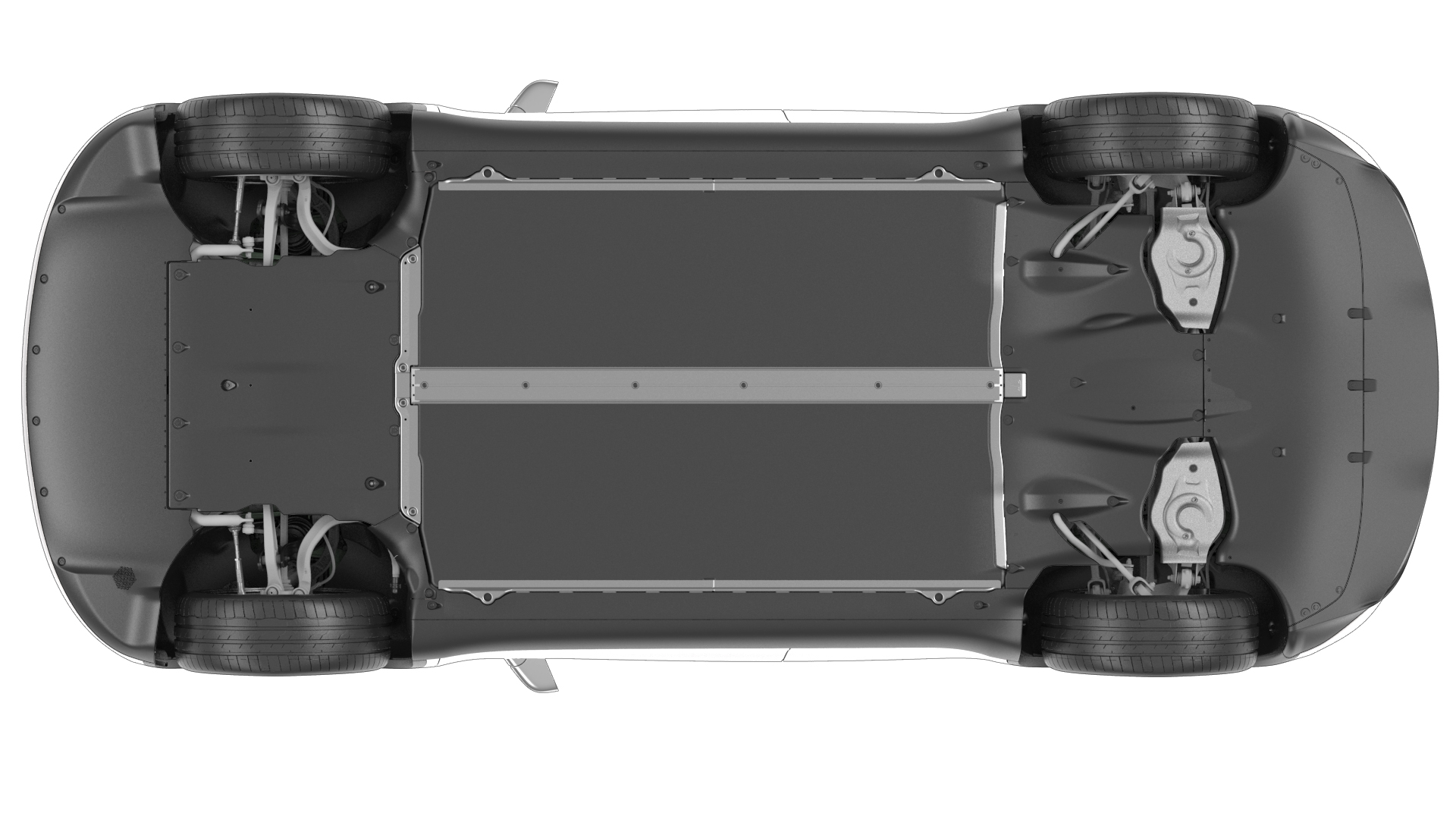
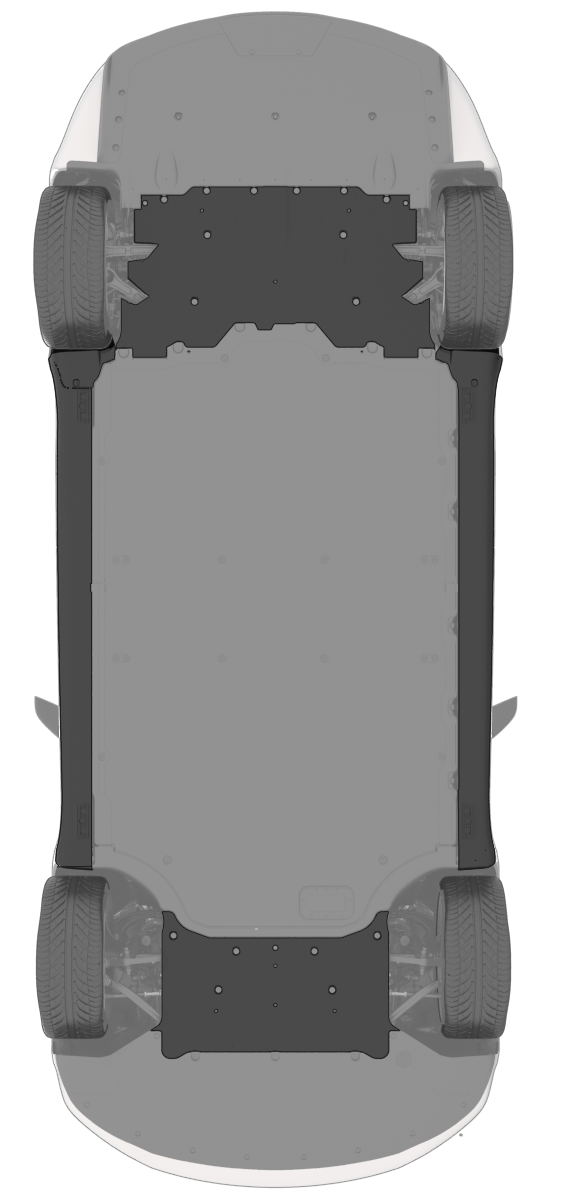
To reduce drag, the design of the 2021+ Model S underbody uses molded plastic paneling that prevents air turbulence. Front to rear, the system begins at the front bumper fascia. Air for cooling and ventilation flows through the grille, which has active shutters to manage mass flow. Air then flows beneath the front valence, which is attached to the front bumper fascia with push-pull plastic rivet clips.
The front valence then mates to the front aero shield. The front aero shield covers the front subframe. The mid aero shield covers the rear subframe and attaches to the High Voltage (HV) battery while slightly overlapping with the wheel arch liners. The mid aero shield is located between the HV battery and the rear diffuser. The rear suspension covers attach to the control arms of the rear suspension. The rear diffuser is the last piece of the underbody aero system. It attaches to the mid aero shield, the trunk load floor, and the rear lower bumper fascia.
 |
|---|
| Overview |
Front Fascialink
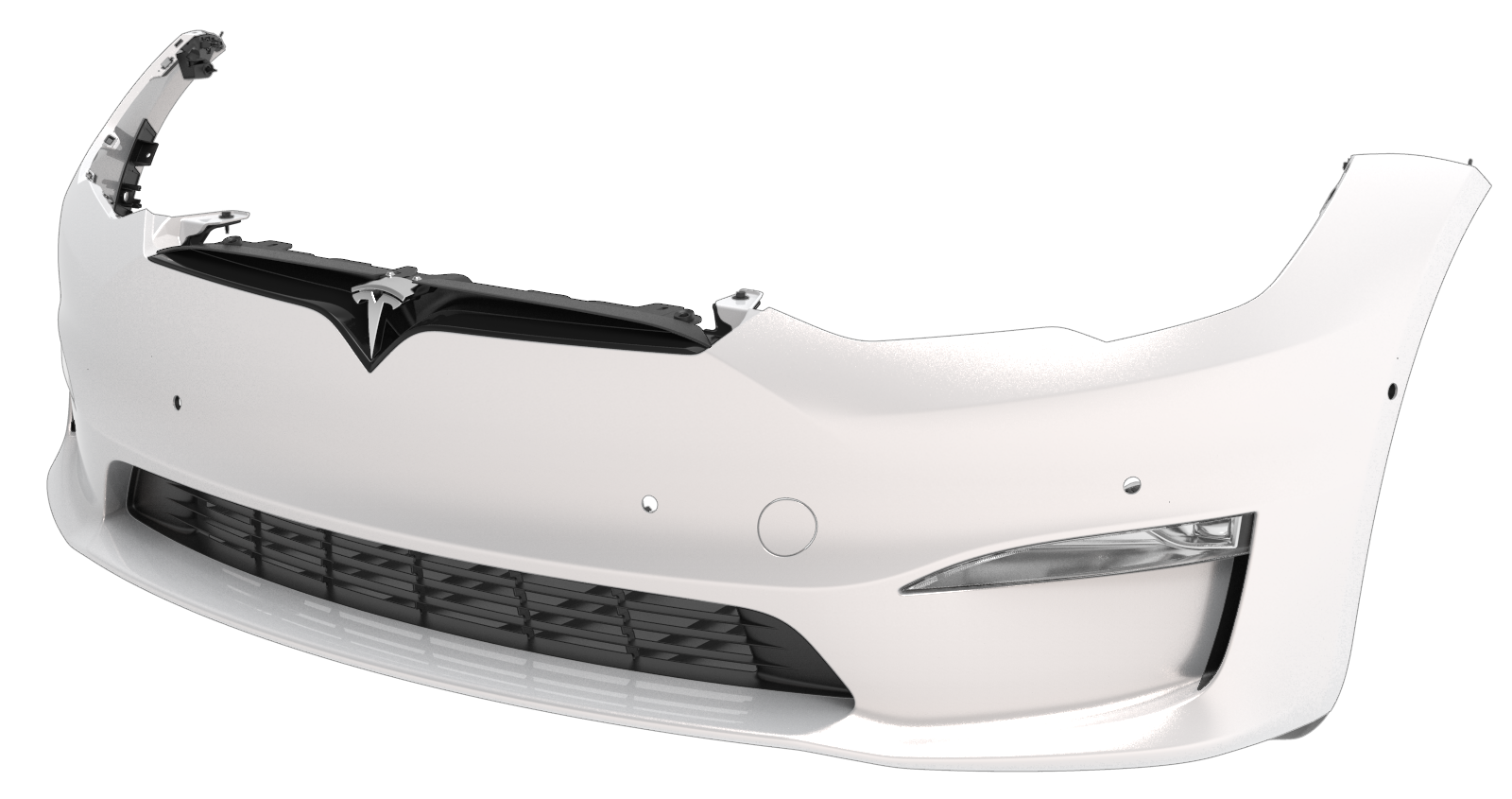
The 2021+ Model S front fascia includes the following attributes:
- Two ducts on the outermost edges
- Grille
- Tow Cover
- Six ultrasonic sensors
- V Bar
- T Badge
- T Badge Support
- Two fascia lamps
- License plate bracket
- Radar heater mat
- Bluetooth Low Energy (BLE) assembly
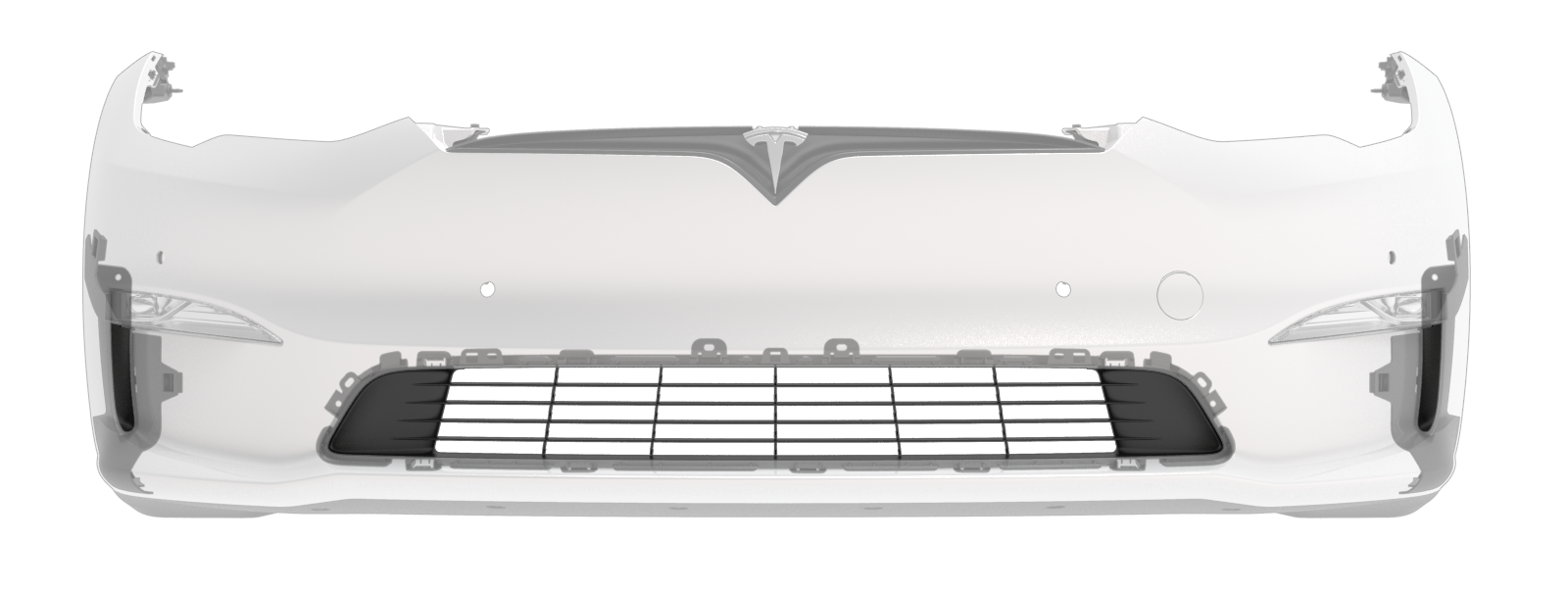
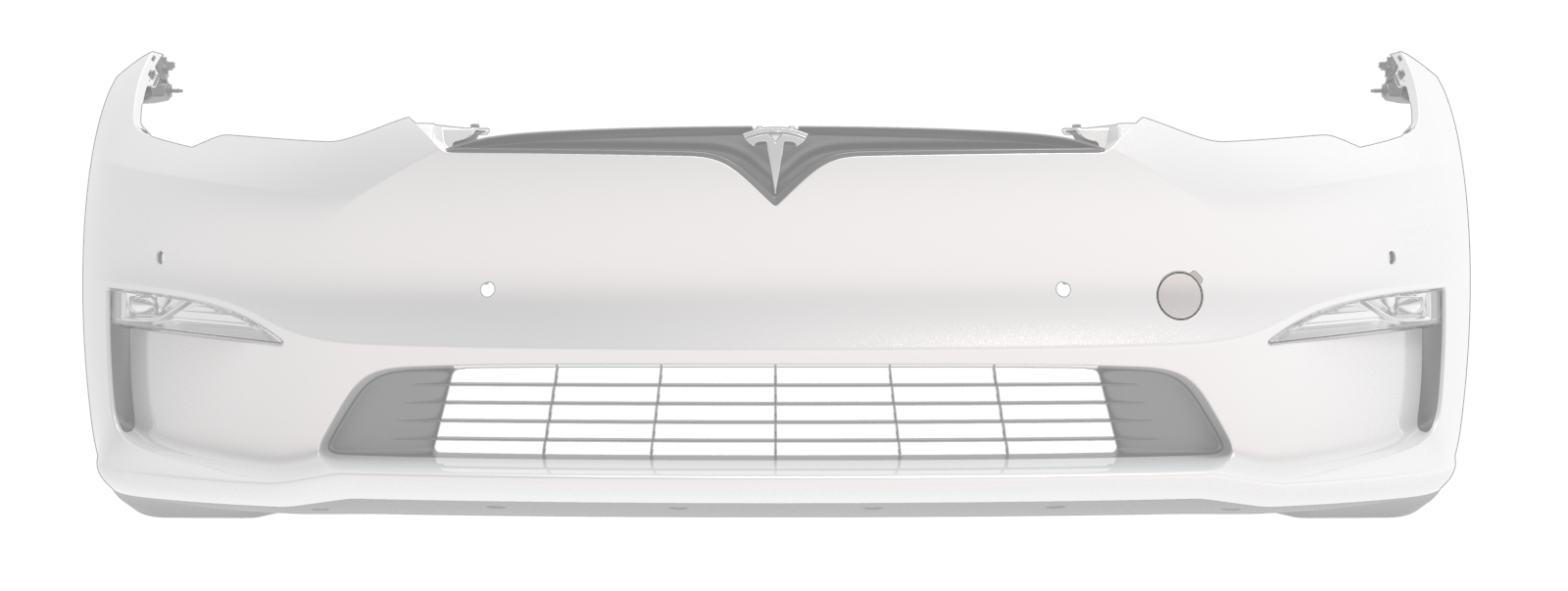
The ducts located in the front fascia lead air to blow turbulence at the front wheels. The grille is there in order to blow air toward the battery. The six ultrasonic sensors aid in autopilot features, further information is available in the drivers assistance system (DAS) section. The tow cover gains access to install a tow eye so that the vehicle can be towed from the front. The V bar allows the Tesla "T" badge to give a floating effect. The radar heater mat keeps the right hand portion of the fascia clear of snow or ice accumulation during winter months, allowing the radar sensor to function year round. The radar heater communicates via VCFRONT. The BLE device senses when a paired phone is near, allowing the user to gain control of locking, unlocking, or opening the trunk. The BLE devices are covered more in the Electrical section.
 |
|---|
| Front Fascia |
 |
|---|
| Ducts and Grille |
 |
|---|
| Tow Cover |
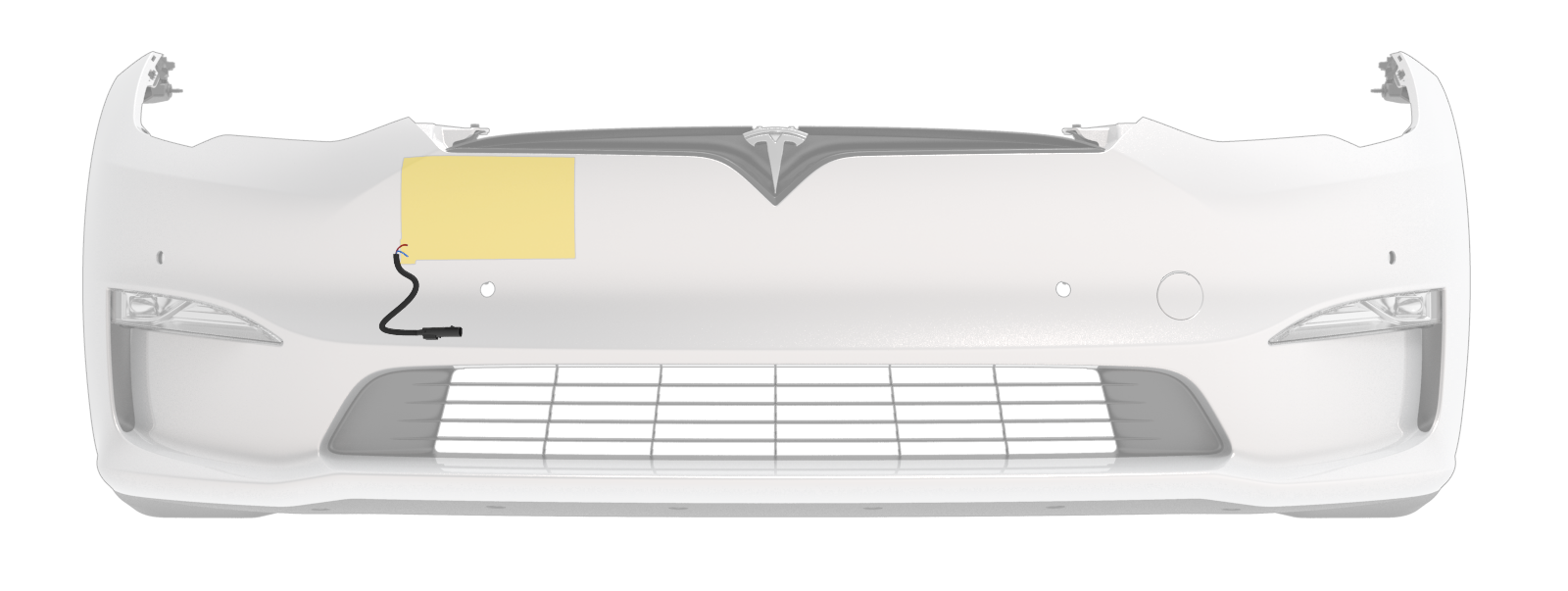 |
|---|
| Radar Heater |
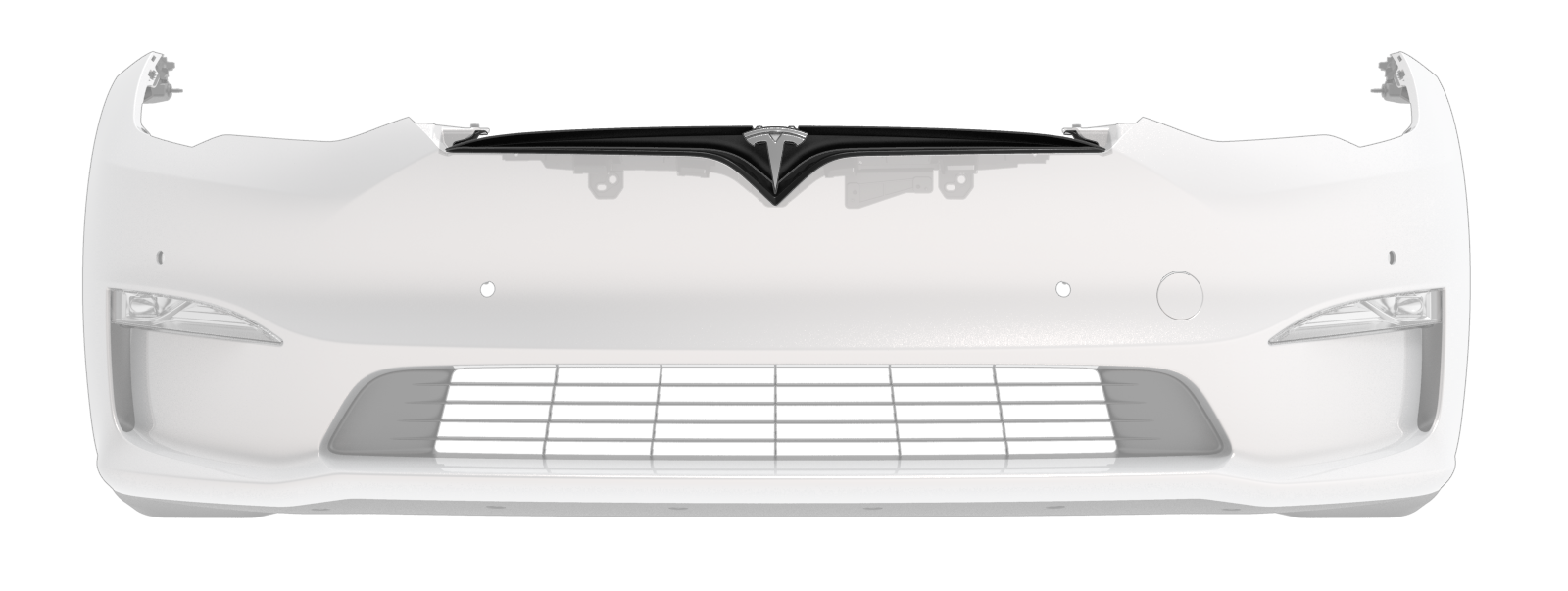 |
|---|
| V Bar, T Badge Support and Tesla T Badge |
Front Valencelink
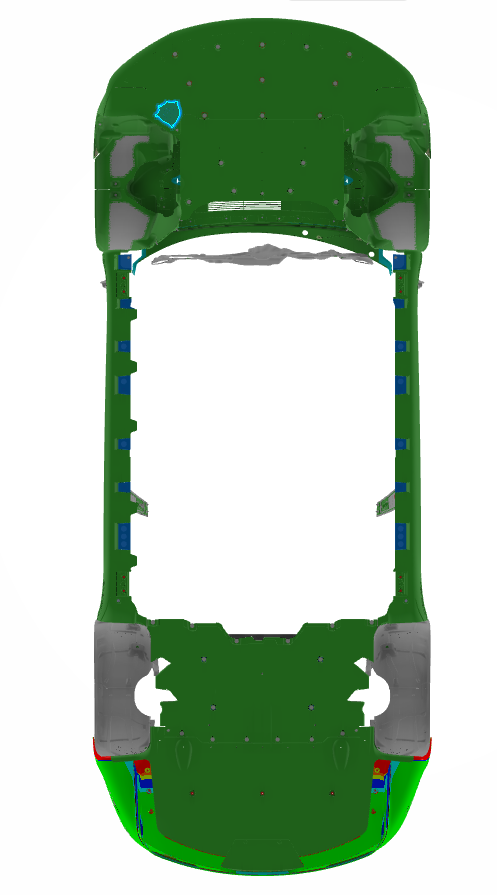
The front valence connects the front fascia to the front aero shield. It aids in the aerodynamics of the vehicle and protects debris from interacting with the front drive unit if it is equipped. The Pedestrian Warning Speaker is mounted on the right hand side of the front valence and provides audio outside the vehicle during various driving circumstances. This is detailed further in the Restraints section.
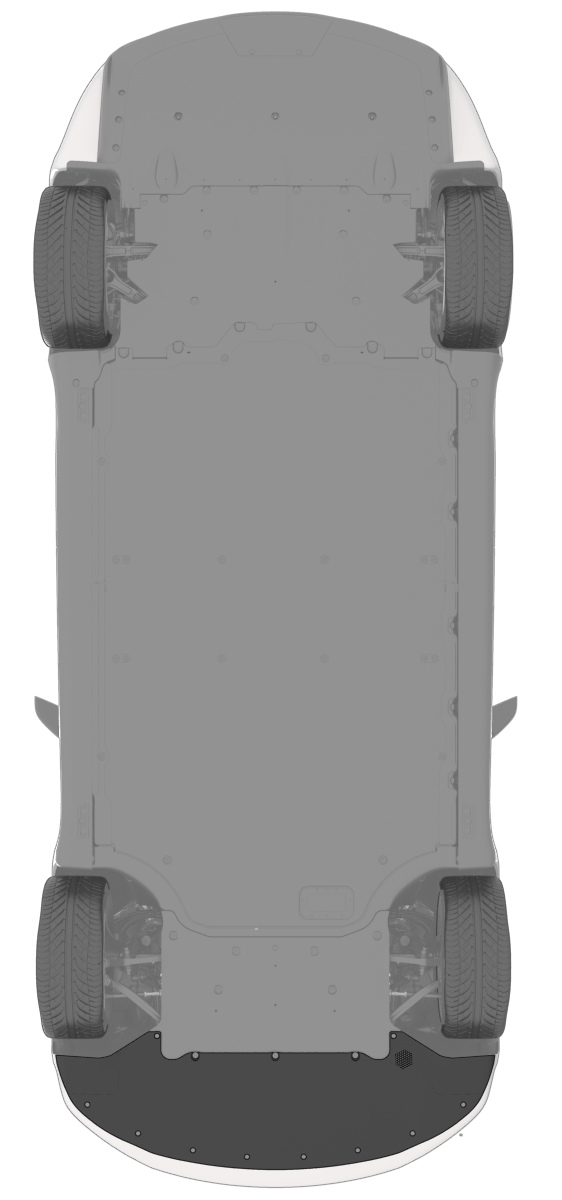 |
|---|
| Front Valence |
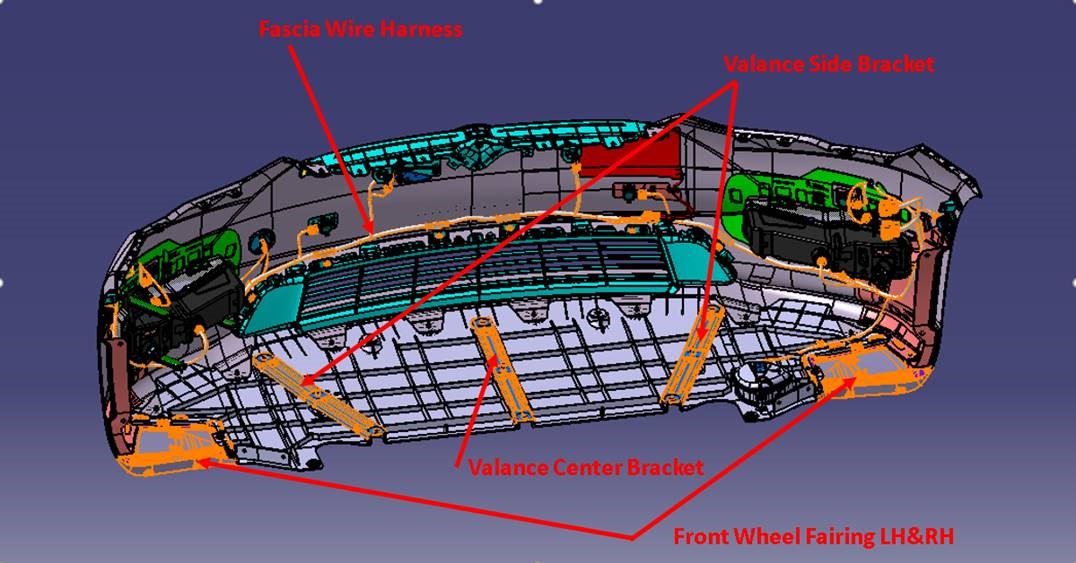 |
|---|
| Front Valence Components |
 |
|---|
| Pedestrian Warning Speaker |
Rocker Panel and Aero Shieldslink
The front and mid aero shields are intended to cover the front and rear subframes. They prevent debris from interacting with the subframes or drive units. The aero shields have several bolts in order to keep them in place during conditions such as driving through water. When removing the mid aero shield bolts that mate with the battery, it is important to check the U-nut to ensure that it is not damaged. The rocker panels serve as both a cosmetic feature and protection to the body. The scuff plate then covers the brackets that mount the rocker panel to the body.
 |
|---|
| Rocker Panels and Aero Shields |
Rear Fascialink
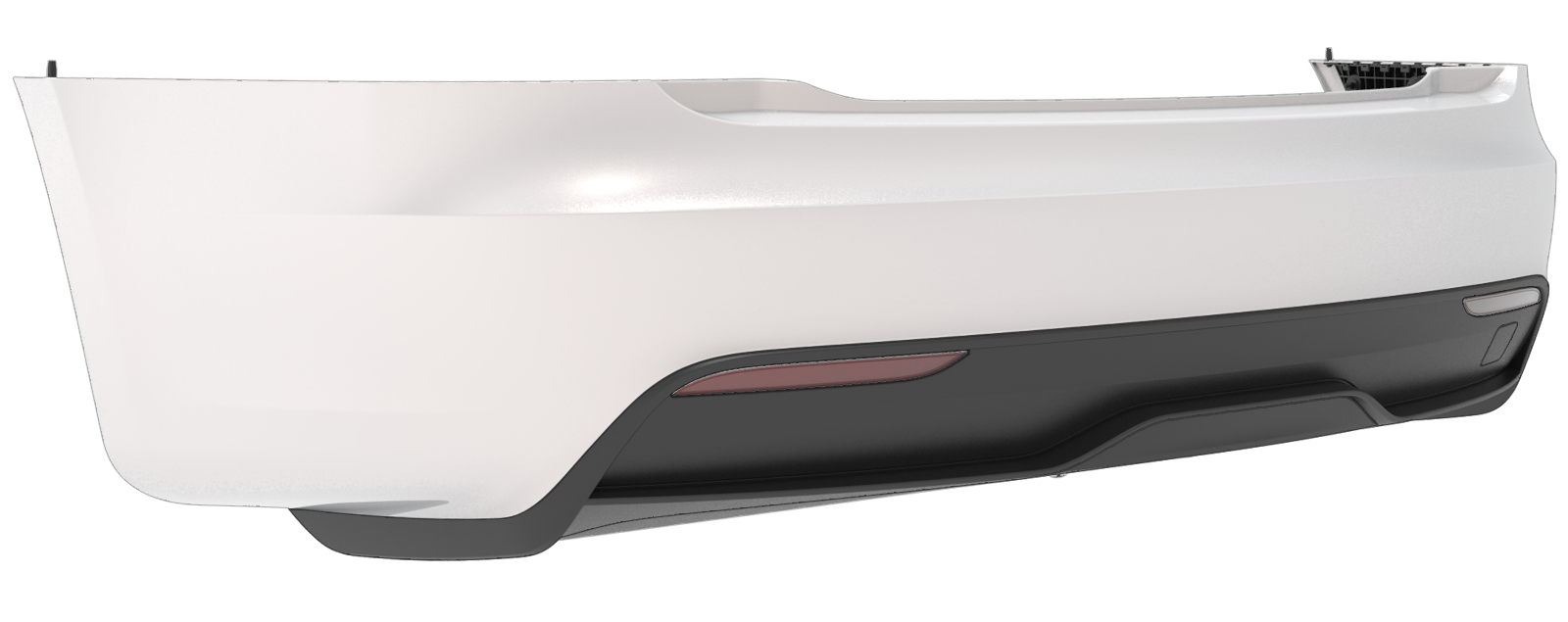
The rear fascia assembly includes the following components:
- Upper rear fascia
- Six park ultrasonic sensors
- Two BLE assemblies
- Lower rear fascia
- Tow hitch cover
- Tow eye cover
- Two reflectors
- Rear diffuser
 |
|---|
| Rear Fascia |
Upper Rear Fascialink
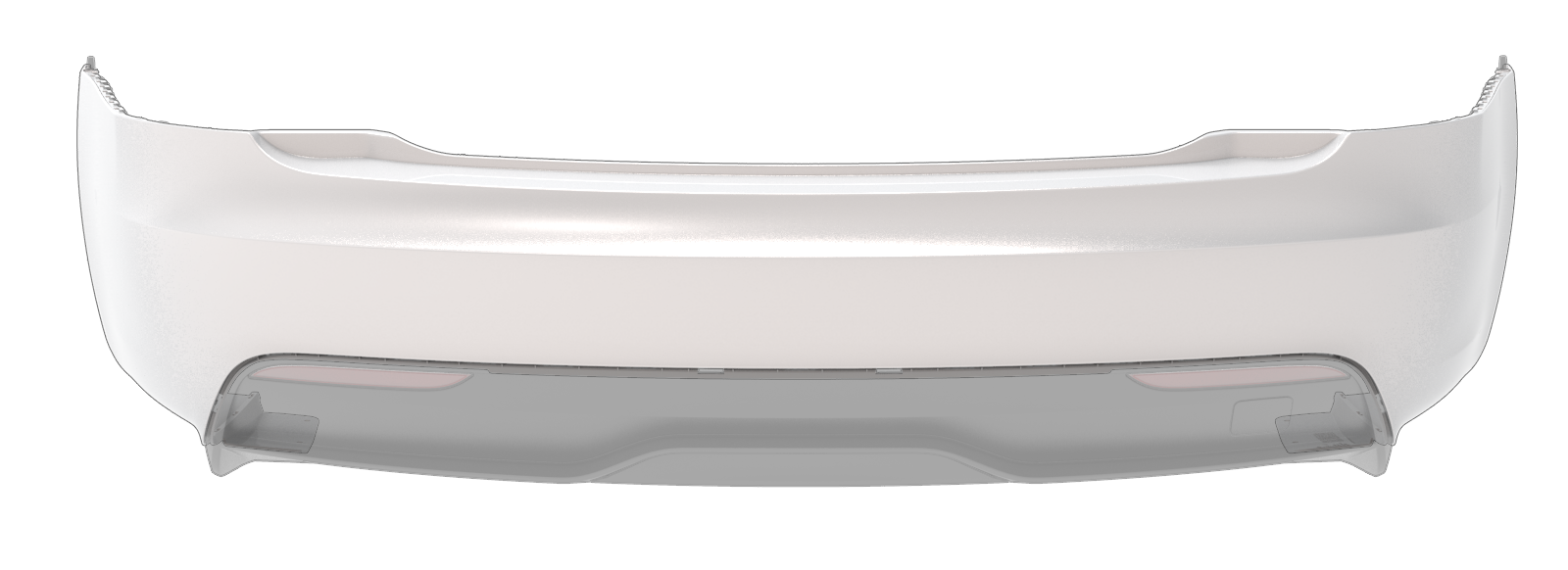
The upper rear fascia has six ultrasonic sensors that aid in autopilot systems. Further information is available in the DAS section.
The Bluetooth Low Energy (BLE) devices sense when a paired phone is near, allowing the user to gain control of locking, unlocking, or opening the trunk. There are two devices in the rear fascia for better coverage. BLE devices are covered more in the Electrical section.
 |
|---|
| Upper Rear Fascia |
Lower Rear Fascialink
The rear fascia will come to service as one component but is separated into an upper and lower piece. The lower rear fascia has the rear reflectors, tow hitch cover, and tow eye cover. The tow hitch cover is on all vehicles, whether a tow hitch / tow bar is installed. The tow hitch cover allows access to the tow bar on vehicles equipped with one. There are two clips on the bottom side of the cover that must be released so that the cover will come down in the Z direction then be pulled off in the X direction. While the tow hitch cover gives access to the customer to tow a trailer or other rack, the tow eye cover, located on the right hand side of the lower fascia, allows the customer to be towed from the rear.
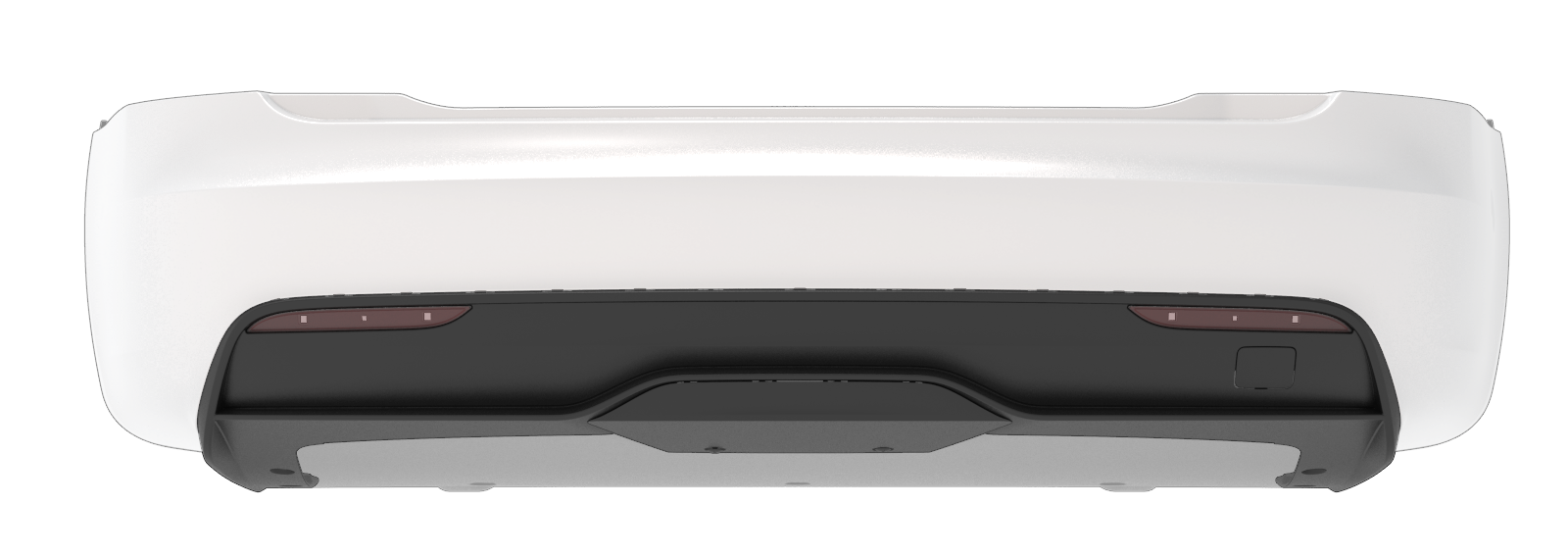 |
|---|
| Lower Rear Fascia |
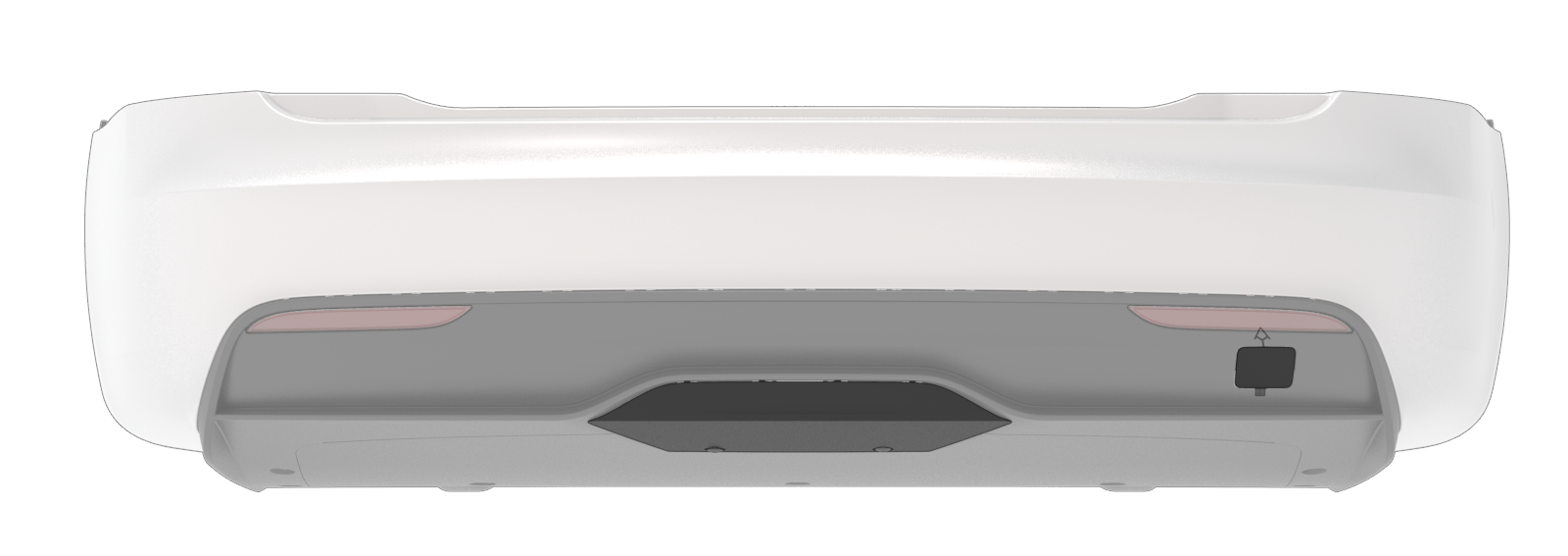 |
|---|
| Tow Hitch and Tow Eye Covers |
Rear Diffuserlink
The rear diffuser attaches to the lower fascia and the mid aero shield. This rear diffuser helps aid in the aerodynamics of the vehicle, allowing for streamlined flow.
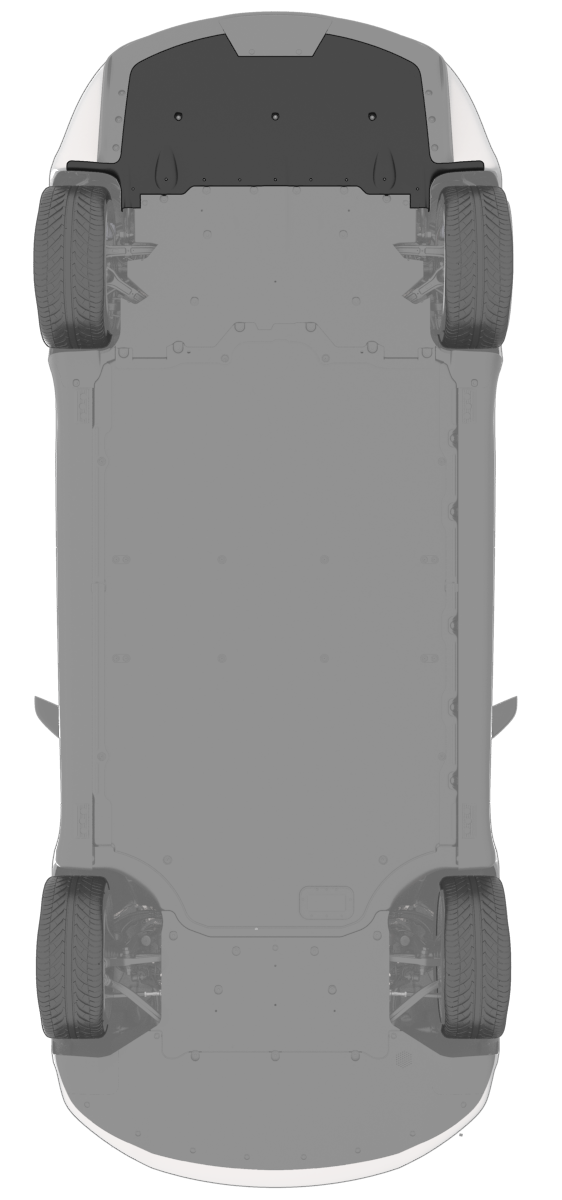 |
|---|
| Rear Diffuser |
Exterior Mirrorslink
2021+ Model S has adjustable side mirrors with a heating system to prevent moisture obstruction. Exterior mirror functionality includes auto tilt, position memory, and power folding. Movement of the mirrors can be done with the steering wheel switches while power folding is done with the UI. 2021+ Model S exterior mirrors are equipped with dimming functionality.
B Pillar Appliquelink
The 2021+ Model S B Pillar Applique contains seals on either side which interfaces with the primary seals of the front and rear doors to help protect against water intrusion. The B Pillar Applique houses the following components:
- Side cameras for autopilot
- Near Field Communication (NFC) board for Key Card Entry (driver's side only)
- Bluetooth receiver for passive entry
Wiper Systemlink
The 2021+ Model S has a variable speed windshield wiper system and a position detection sensor. These components enable 2021+ Model S to clean and clear the windshield of reasonable debris and liquid. Actuation of the wiper system is requested by the front vehicle controller (VCFRONT) over a direct local interconnect network (LIN) connection but is managed by integrated control electronics that are embedded into the gearbox cover of the wiper motor. The wiper speed and direction are controlled by varying the control signal and switching the polarity across the wiper motor respectively.
There is 1 nozzle on each of the driver and passenger wiper arms. Each nozzle has 5 jets to spray water on the windshield. 3 of these jets are adjustable, and 2 are fixed. The adjustable jets have a ball joint to move while the fixed jets do not. The jets can be moved by utilizing a small pin or a paper clip to move to the necessary area. It is important to adjust the jets if there is a complaint that water is not reaching certain areas of the windshield.
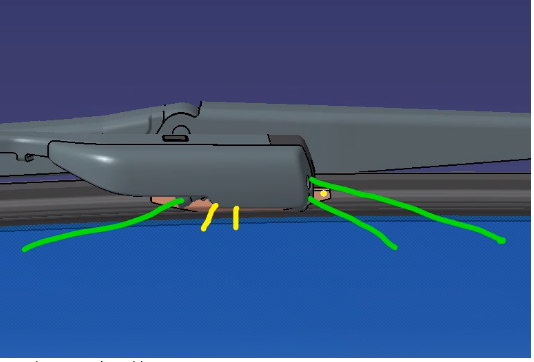 |
|---|
| The green lines indicate an adjustable jet, while the yellow lines indicate a fixed jet |
| Nozzle jets |
If there is a blockage within the coverage area, the windshield wiper system will attempt to clear the blockage by performing 3 break-off attempts. The system may stop and move during the break-off tests in order to facilitate the clearing of any debris on the windshield. A blockage on the windshield is detected by evaluating the torque applied along with the current level to the motor over a given period. The system also ensures the wiper arm is in the middle of the windshield as opposed to the upper reversal (end of travel) where something like snow could cause build up but would not impede vision. In the event that the blockage cannot be cleared, the embedded electronics will stop the motor in order to prevent damage and send a 'wiper is blocked' signal to the front vehicle controller. If the third break-off attempt is unsuccessful, the arms will return to the park position. There are beauty covers for the arm head nuts for aesthetic purposes.
The center of the tips of the driver and passenger blade are to line up with the markings on the windshield.
Below are the moving linkages when performing wiper installation. Caution is advised as these are not stationary parts.
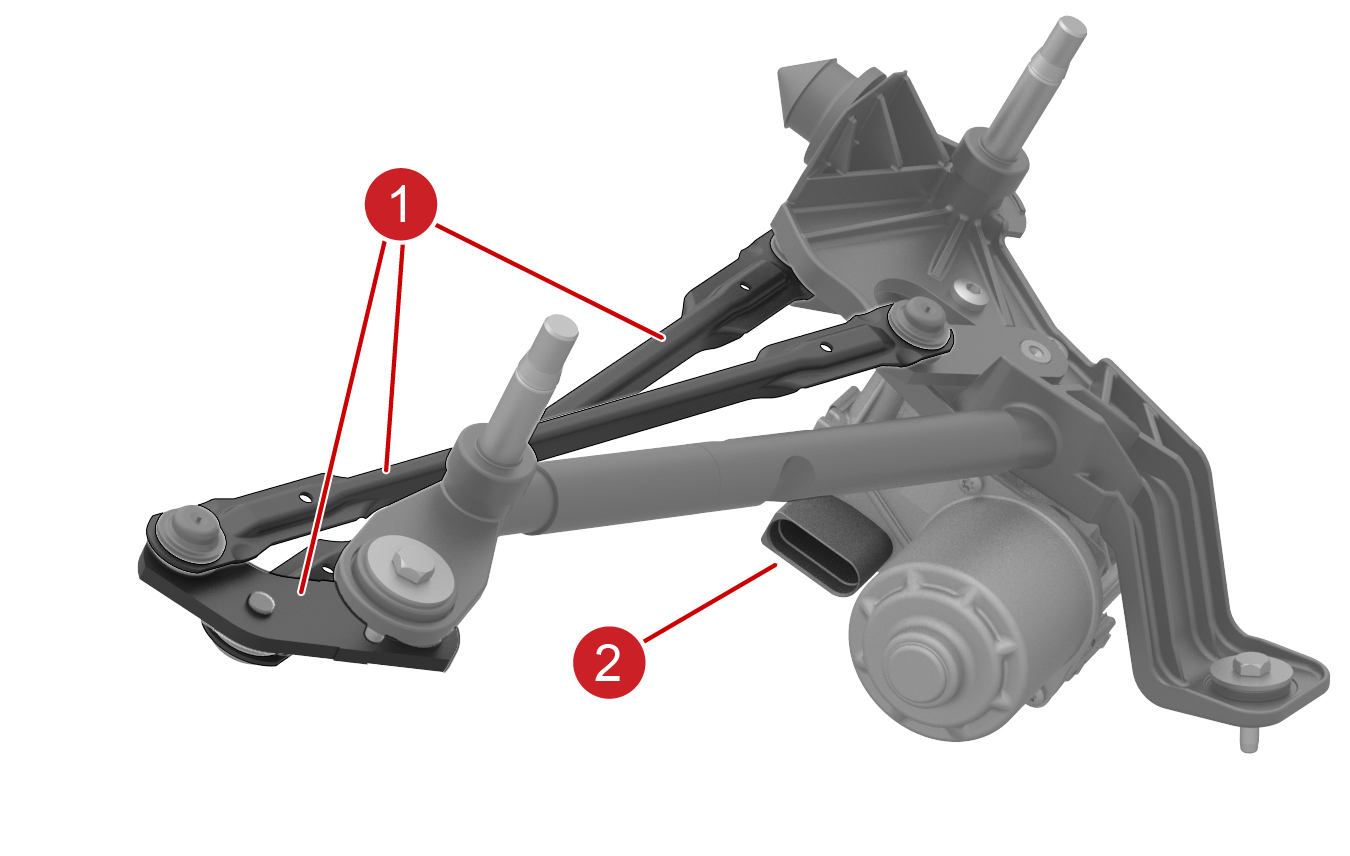 |
|---|
| 1. Moving linkages 2. Harness connector |
| Windshield Wiper Components |
There are four positions for the wiper arms: park, lower reversal, service, and upper reversal. Park position is at the bottom of travel, where the wipers sit when not being actuated. It sits out of view to give full access to the windshield. Lower reversal is the lowest the wipers will reach during operation of the wipers. The service wiper position is 35 degrees higher up on the windshield than the park position to aid in removal and replacement of the wiper blades.
Upper reversal is the end travel of the wiper arm.
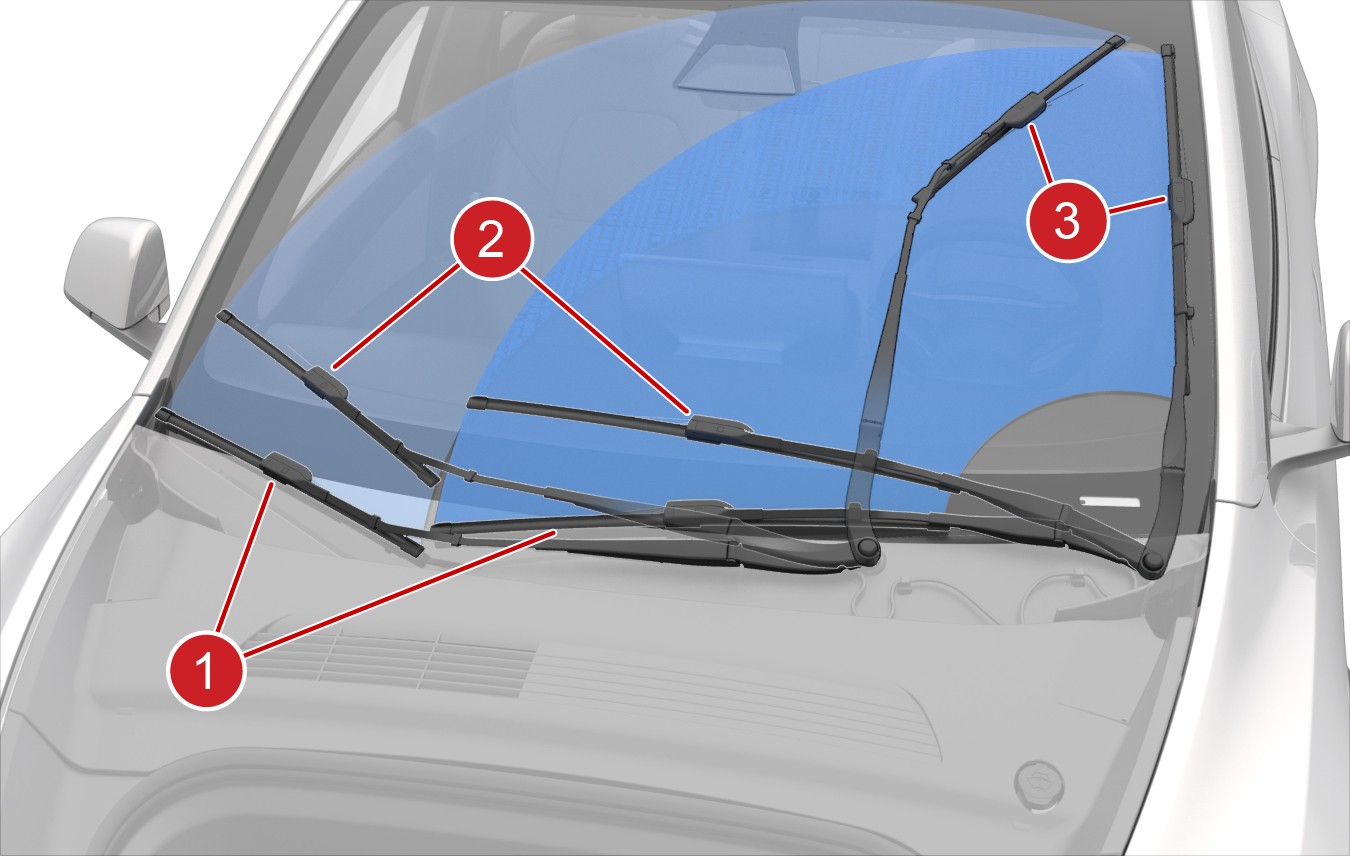 |
|---|
| 1. Park position 2. Service Position 3. Upper Reversal Position |
| Windshield Wiper Arm Positions |
Table 1. Wiper Parameter Data:
| Driver Side Arm | Passenger Side Arm | |
|---|---|---|
| Arm Tip Force (N) | 11.2N | 8.8N |
| Attack Angle at Park (degrees) | 5° | 5° |
| Attack Angle at Upper Reversal (degrees) | -4.2° | - 4° |
| Service Position (degrees) | 35° | 31.8° |
The 2021+ Model S washer tank is one singular molded part. The tank is located in the front of the driver's wheel and can be accessed by removing the driver's wheel. The capacity of the washer tank is 4.45 liters. The low fluid detection will go off at around 640ml. When the vehicle has indicated that there is low fluid in the washer tank, there will be approximately 20 wash cycles left. The low fluid detection sensor is a float sensor, so orientation of the sensor is critical for proper operation. The washer system communicates on VCFRONT where the level sensor and the pump connects directly on the front harness.
The wipe and wash cycle requests are controlled via a haptic button on the steering wheel. A singular press is wipe and a press and hold is wipe and wash. The wipe speed is controlled through the UI.
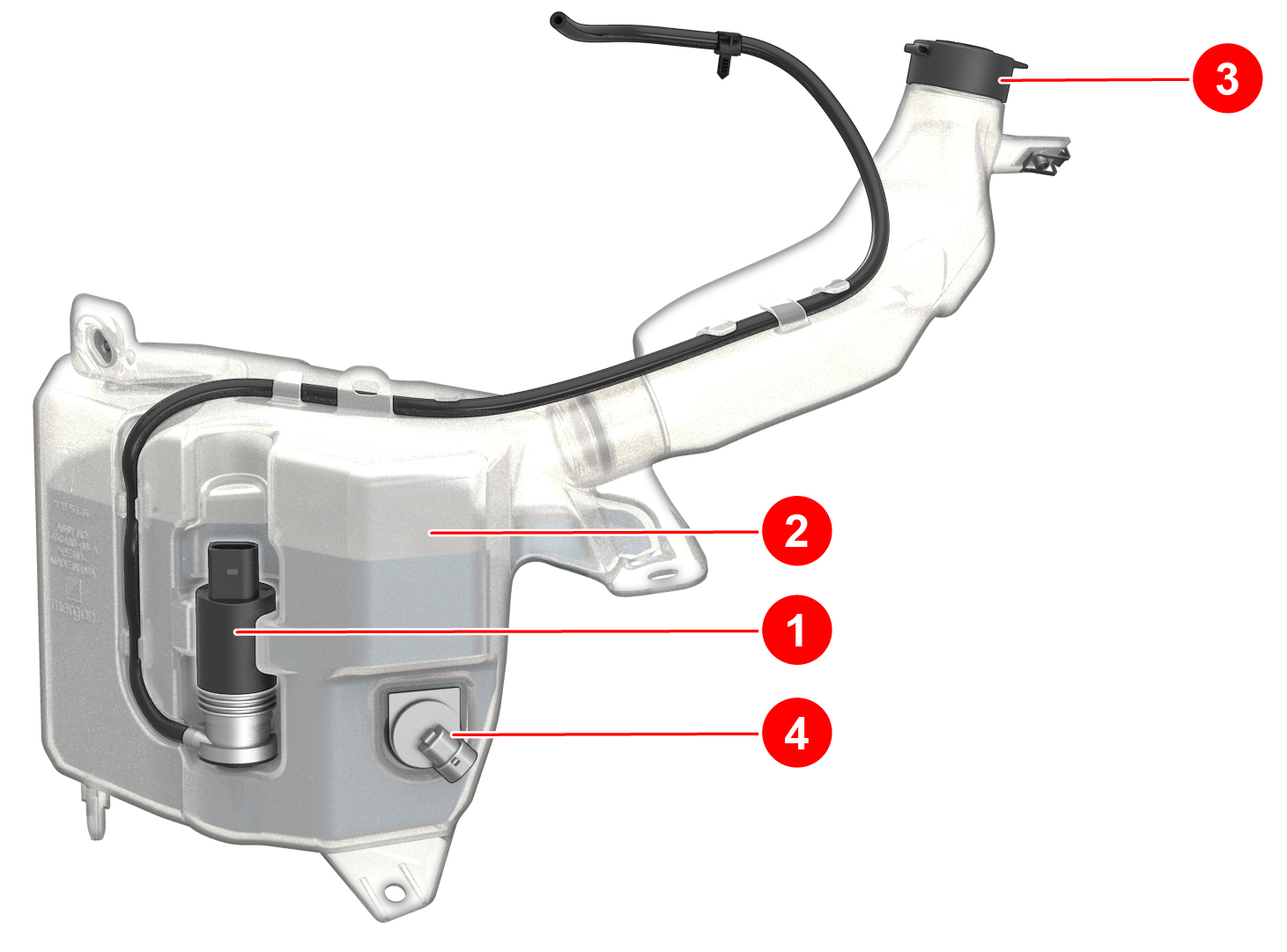 |
|---|
| 1. Washer fluid pump 2. Washer tank 3. Washer fluid Cap 4. Washer fluid level sensor |
| Washer System |
Noise, Vibration, and Harshness (NVH)link
2021+ Model S has front and rear motor noise absorbers. The front noise absorber is located between the instrument panel and the motor, and the rear noise absorber is located between the third row seats and the rear motor. Cutouts on the front noise absorber facilitate the installation of items like the heating, ventilation, and air conditioning (HVAC) module, front electrical system, the steering column, and other components of the instrument panel.
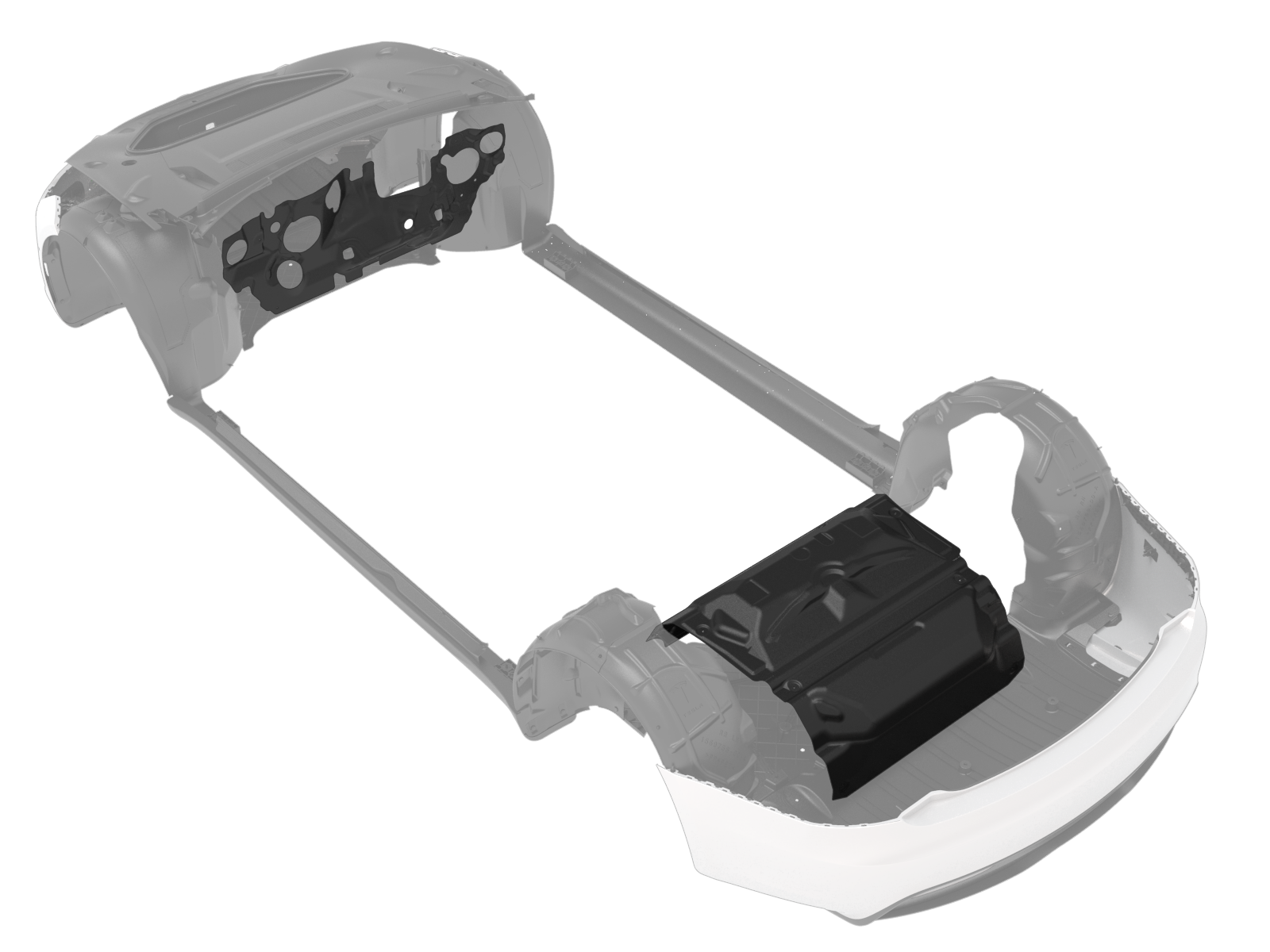 |
|---|
| 1. Front motor noise absorber 2. Rear motor noise absorber |
| Noise Absorbers |
Wheel Linerslink
There are four wheel liners in 2021+ Model S. These help protect the vehicle against damage from rocks, dirt, salt, road debris, and weather elements. Wheel liners are snapped into place using push-pull rivets which attach the wheel liners to the body-in-white, front and rear fascias, front and mid aero shields, and rocker covers.